
Private 5G at sea: two years of maritime testing
When the sea becomes the network
Ask anyone who has tried to run a stable connection offshore, and you will hear the same complaint: the sea does not cooperate.
Radio waves bounce off the water's surface, vessels move constantly, weather shifts within hours, and there is rarely any fixed infrastructure to lean on. For coastal surveillance, naval operations, or offshore monitoring, that means blind spots, delayed data, and systems that struggle to talk to each other.
Over the past two years, we have treated this as a problem to work through in the field rather than in a lab. What follows is a short recap of that path: a private 5G network tested at sea, refined across national and NATO exercises, and pushed toward ship-to-ship links and multidomain coordination. Each stage is summarised briefly here, with a link to the full story for anyone who wants the details.
MTCOM: a network built for the coast
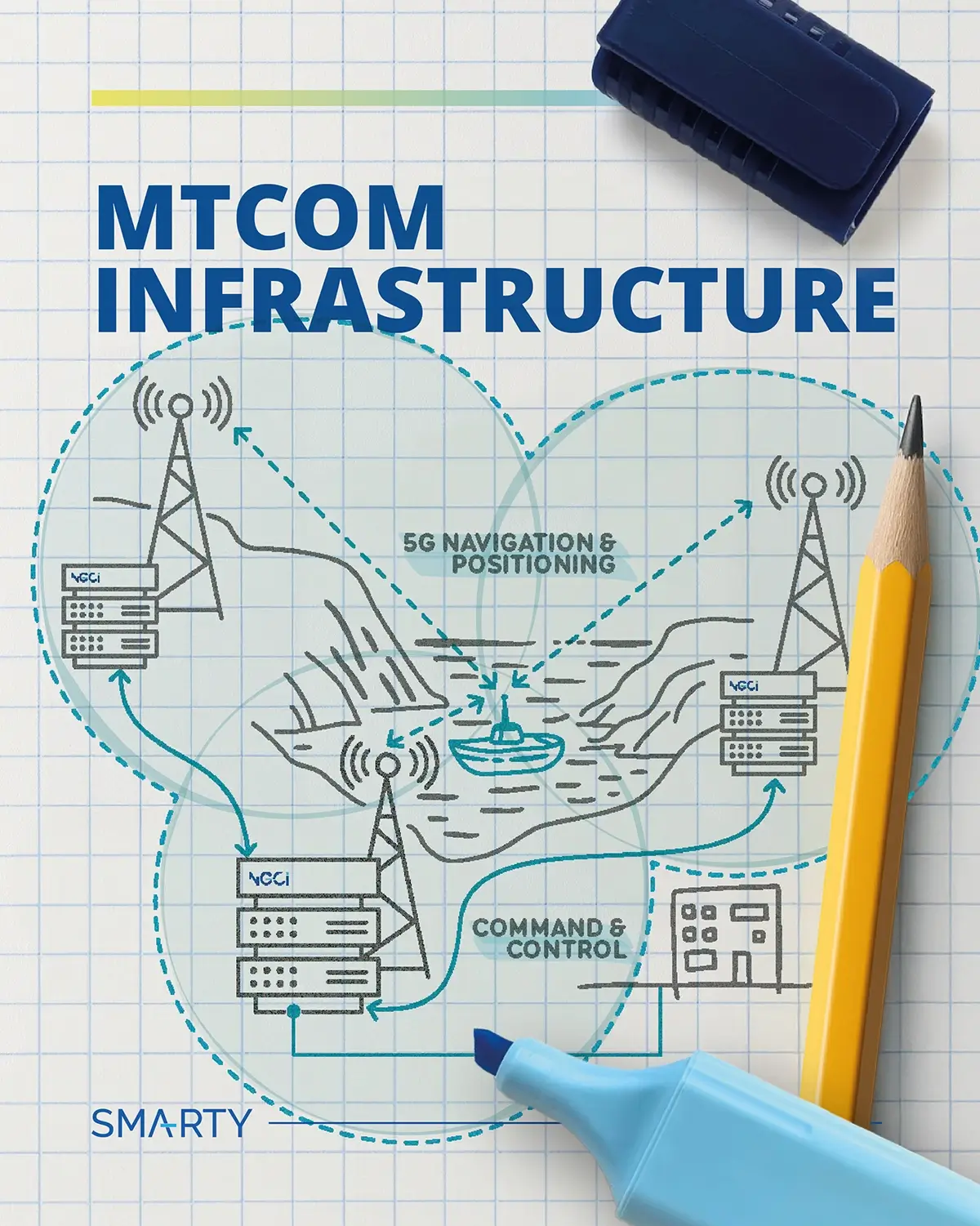
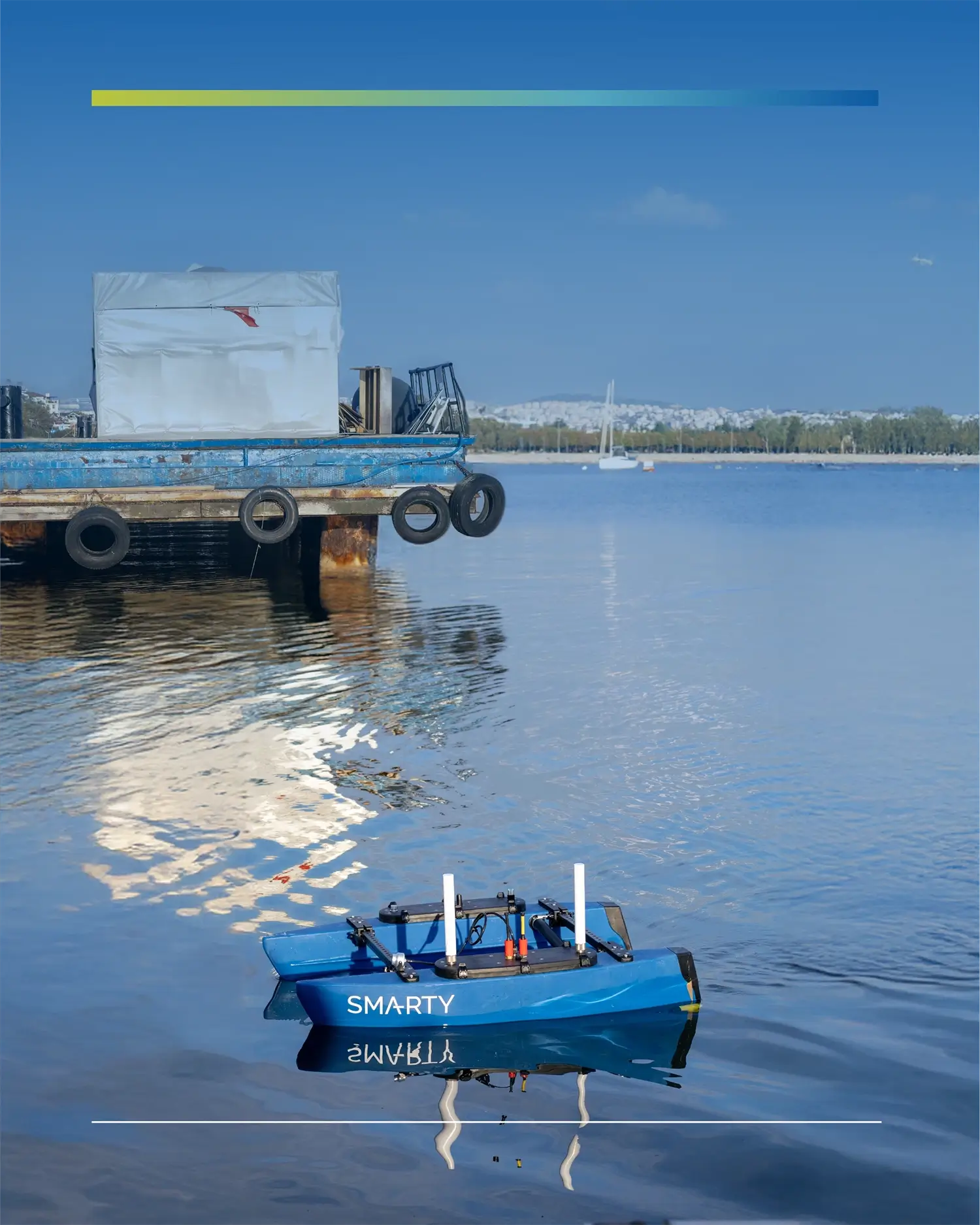
MTCOM (Marine Terrestrial 5G Communications for Autonomous Drones) is where the maritime work began: a private 5G infrastructure built together with Infocom, EdgeLab, Sitep, and the University of Genoa to monitor the Gulf of La Spezia through autonomous surface drones, watching for safety risks, pollution, and threats to biodiversity. Read the full project story.
Why the maritime environment resists standard networks
Commercial mobile networks fail offshore because radio signals reflect off the water, causing direct path signal interference. This phenomenon was analyzed in depth by University of Genoa researchers during the MTCOM project, explained here in more technical detail. Add long distances, salt spray, and unpredictable vessel traffic, and it is easy to see why off-the-shelf connectivity was never designed with this environment in mind.
OPEX TASK 1-25: first tests with the Italian Navy
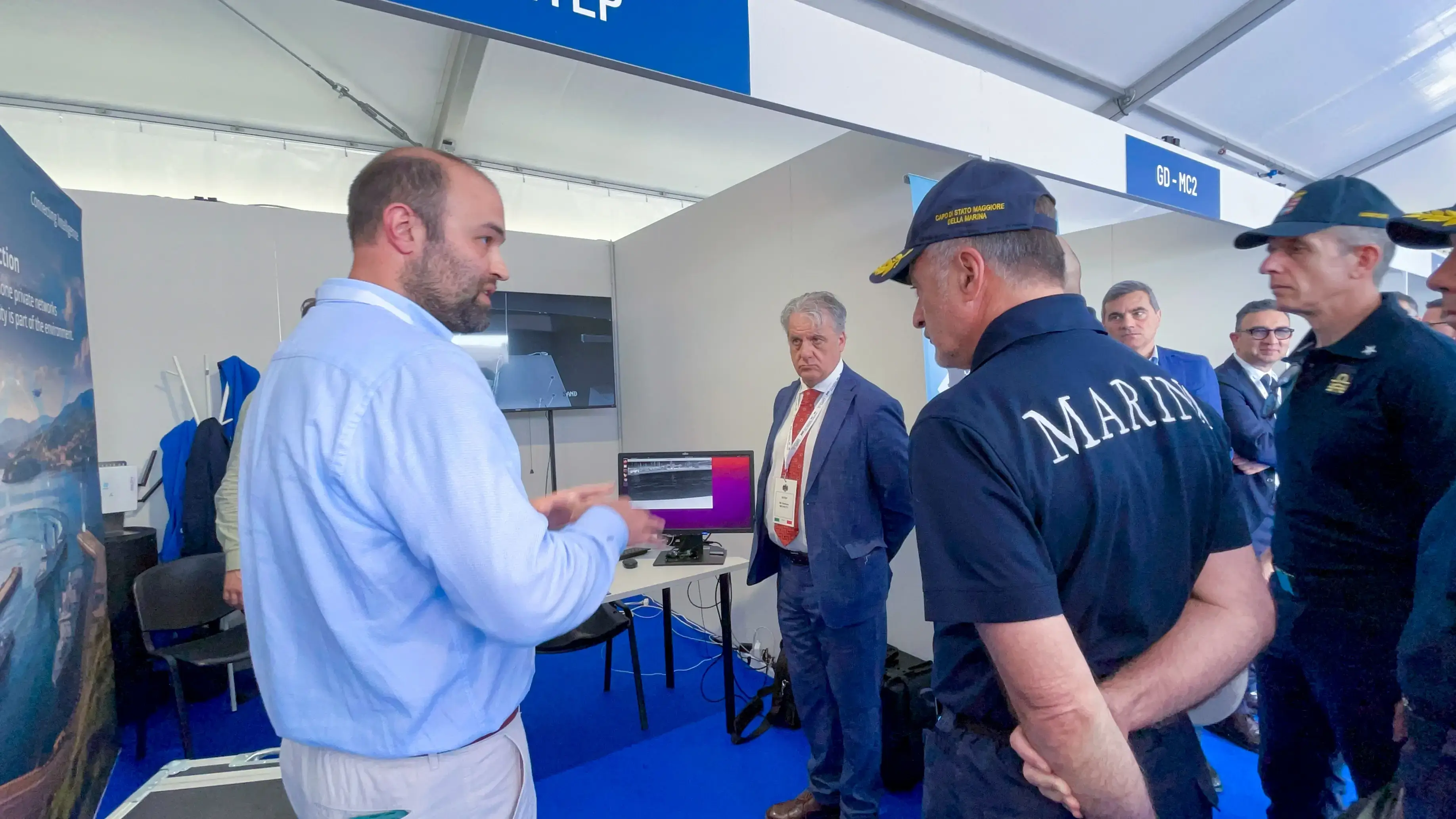
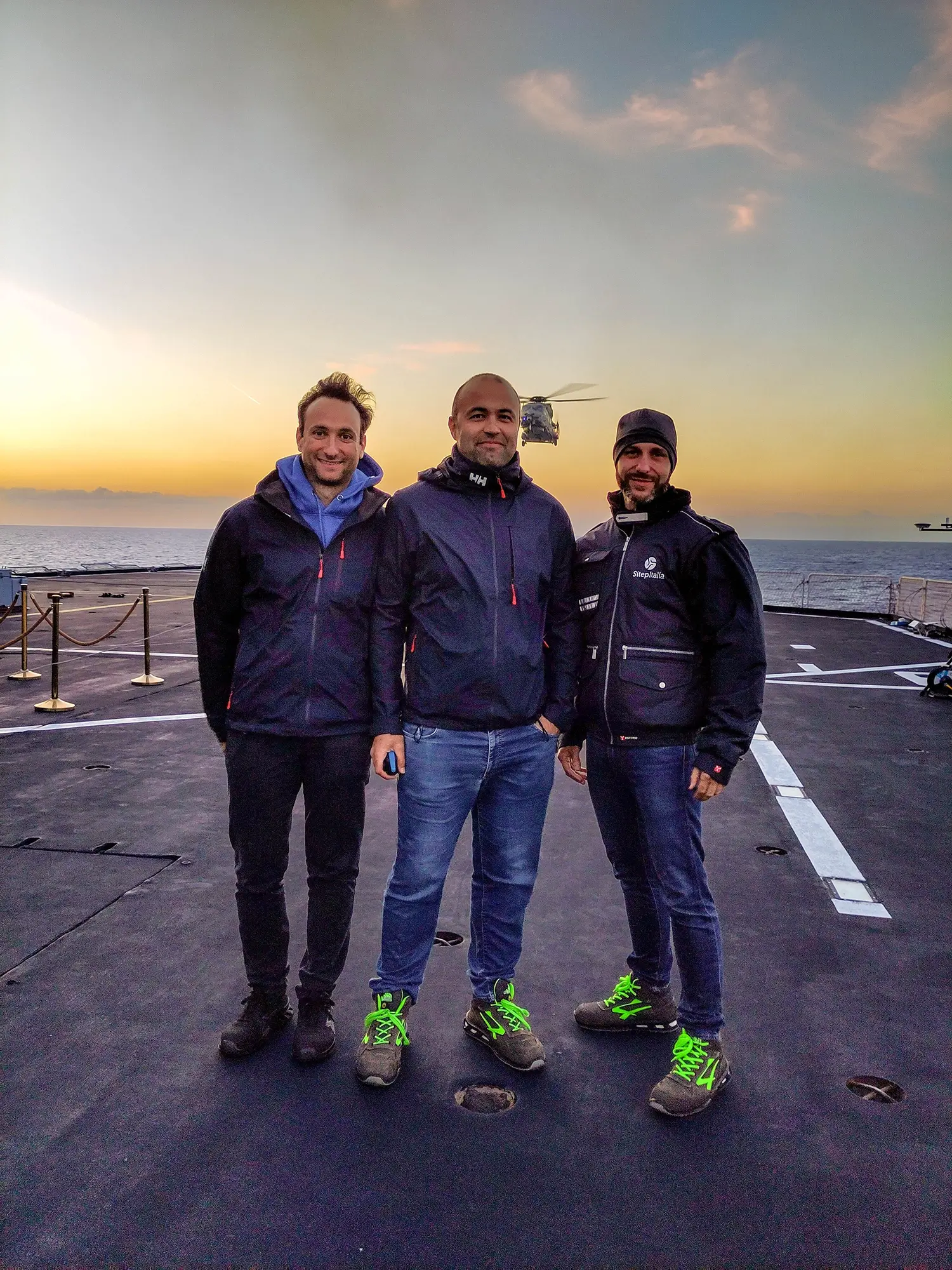
In May 2025, MTCOM's technology met real naval operations for the first time. During a five-day exercise in the Gulf of La Spezia, we deployed a 5G antenna just two metres above sea level, together with Sitep Italia, to connect unmanned surface vehicles with command platforms. Coverage held across most of the Gulf despite the low antenna position, an early confirmation that the network could hold up outside controlled conditions. See how it went.
GLOW and SHINE: testing inside NATO's Innovation Continuum
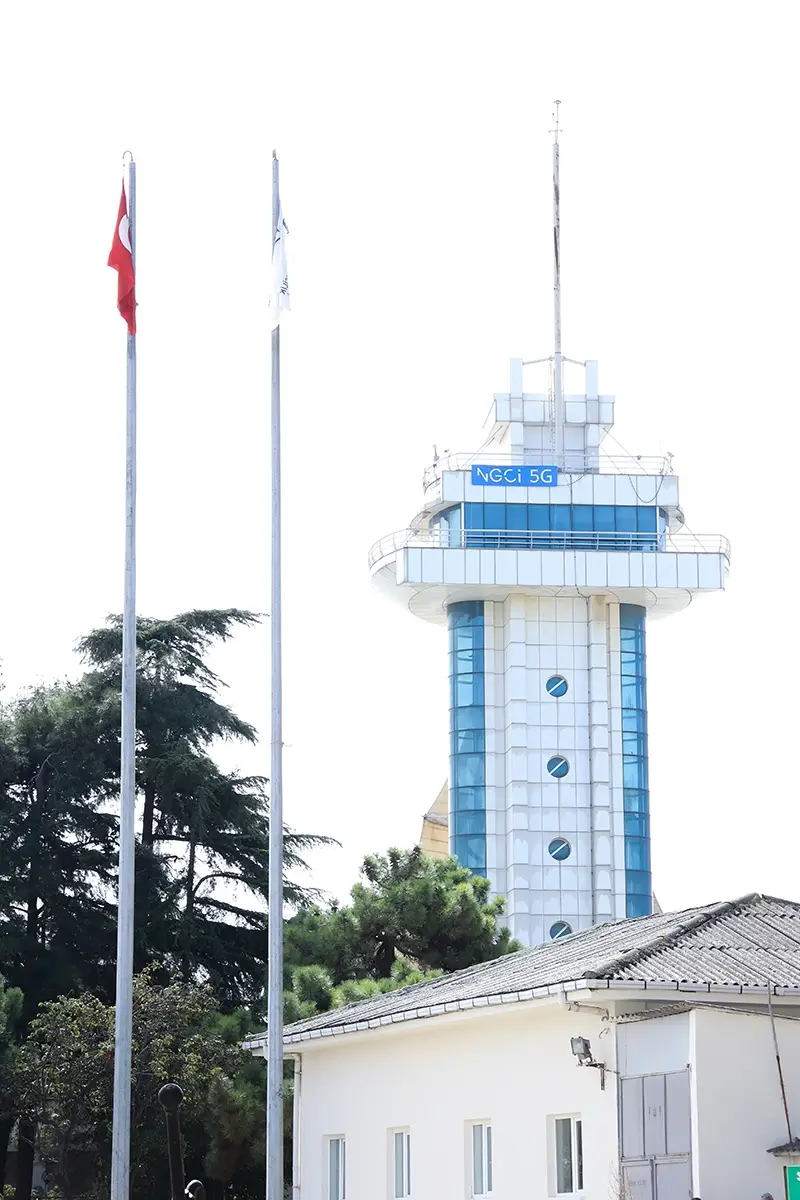
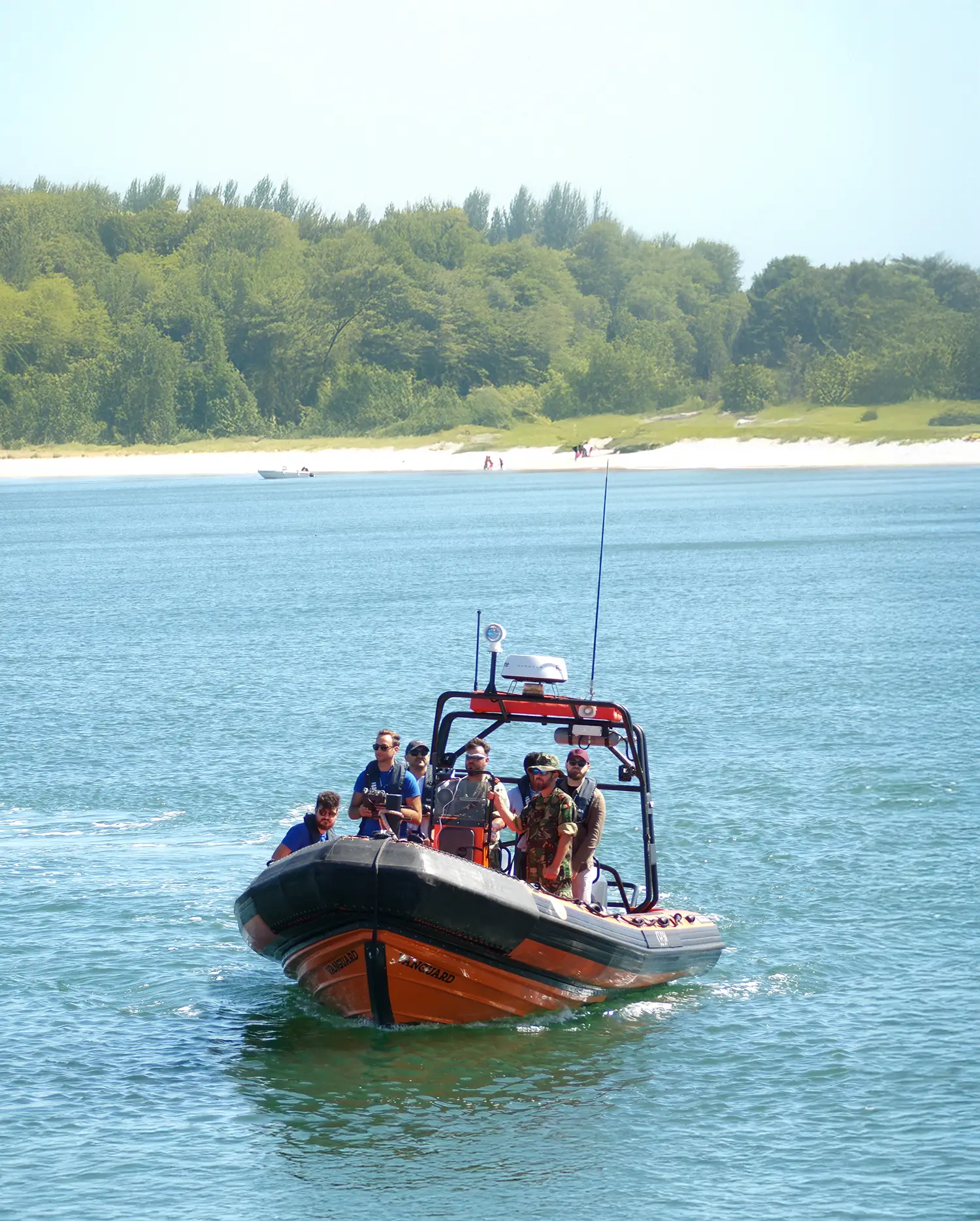
Through autumn 2025, we joined NATO's Innovation Continuum, a staged programme run by Allied Command Transformation to move new technologies from concept to field demonstration. At GLOW 2025 in Portugal, NGCI was tested alongside private 5G networks from other vendors, including early work on roaming between different infrastructures. A month later, SHINE 2025 in Istanbul raised the stakes: an NGCI cell mounted on a navigation tower connected underwater, surface, aerial, and ground systems in a single live scenario, staying stable at distances up to three kilometres offshore.
Seafuture: underwater, surface, and land in one flow
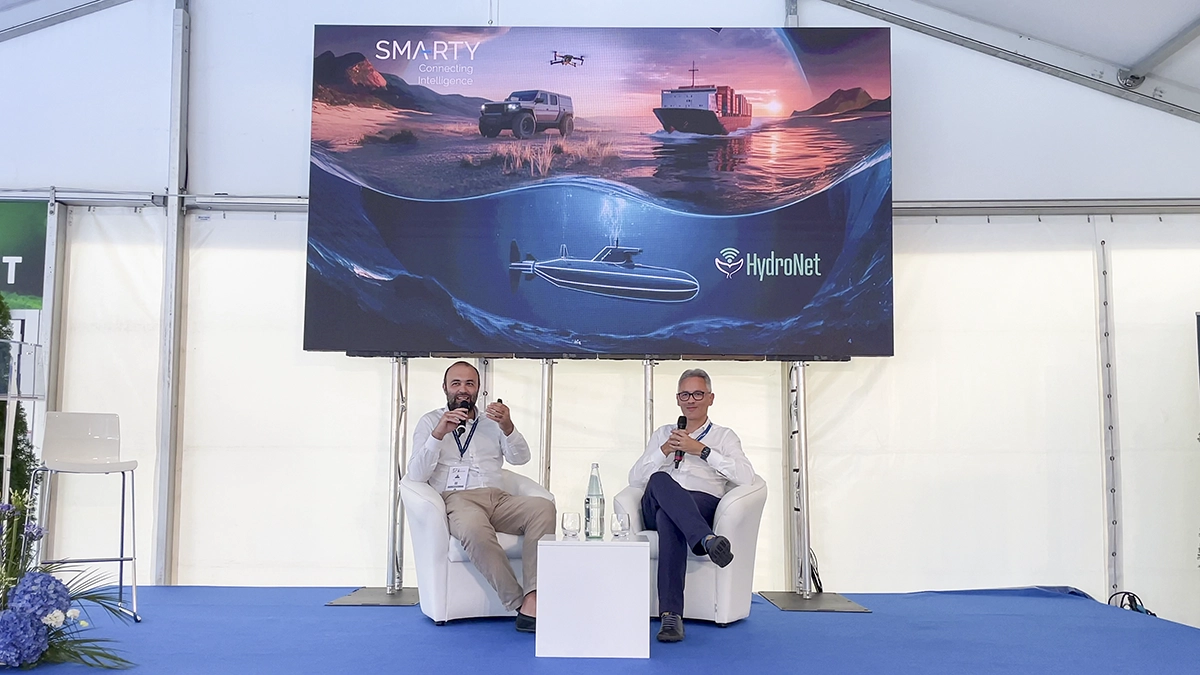
At Seafuture 2025, held at the Naval Base of La Spezia, we worked with Hydronet to chain an underwater drone, a surface vessel, and our private 5G network into a single flow of data, reaching a command and control centre on land. The event also placed maritime connectivity in a wider conversation, from a ministerial visit to a panel on technological sovereignty in the maritime supply chain.
OPEX TASK 2-25: connectivity between two ships underway
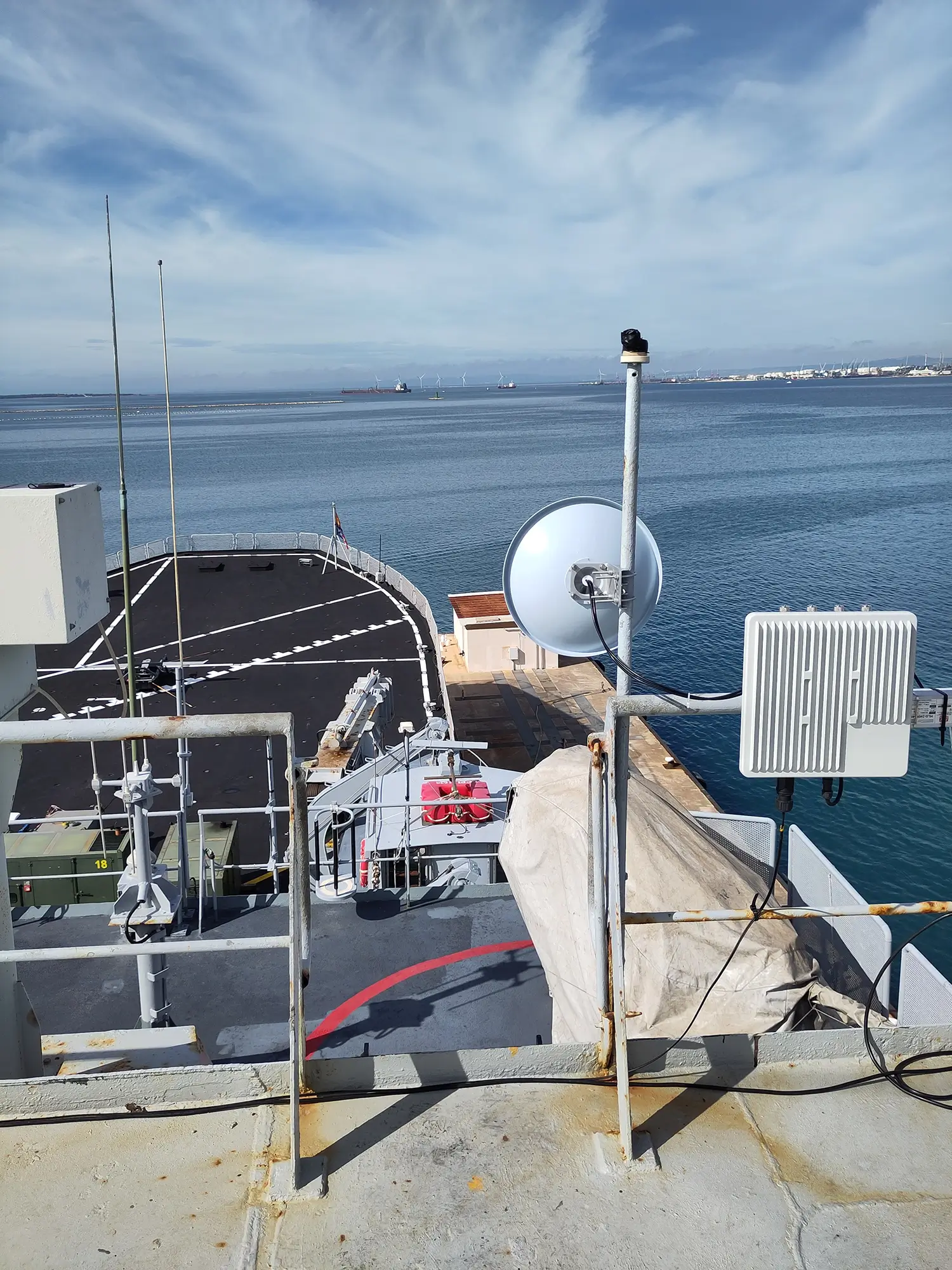
By March 2026, the question had shifted from coastal coverage to ship-to-ship communication. During OPEX TASK 2-25, we installed a 5G cell on one naval unit and a user terminal on another, then ran real-time video and data sessions across open water over four days. The link held up against motion, interference, and signal degradation typical of underway operations.
The future of maritime 5G: mesh networks and decentralised links
The next problem is what happens when there is no single cell to rely on at all, when a drone moves out of range or a sensor briefly drops off the grid. That is the direction of MARGUS, still in early development, and of the mesh network architectures we are currently building as part of NATO and PNRR-funded projects, where every node can relay data for the others and route around a broken link automatically. Read more on where this is heading.
Talk to us about your maritime connectivity challenge
None of this work closes the gap in maritime connectivity on its own, and none of it happened in a lab. It grew out of exercises, sea trials, and partnerships with the Italian Navy, universities, and NATO agencies.
If your organisation is dealing with a similar problem, coastal surveillance, ship-to-ship communication, or multidomain coordination at sea, let's talk.