
MTCOM project: the science behind maritime private 5G
What happens when a 5G signal leaves the city and moves out to sea?
Deploying private 5G networks at sea presents distinct propagation challenges compared to urban environments, mainly due to surface reflections and open water signal behavior. Signals travel over open water, reflect off the surface, and interact with the environment in ways that can complicate communication systems.
These are exactly the kinds of questions explored by MTCOM, a project focused on developing a coastal control system for the port of La Spezia. The goal is to enable reliable monitoring and management of maritime autonomous drones (USV – Unmanned Surface Vehicles) using a private 5G network operating in a complex environment.
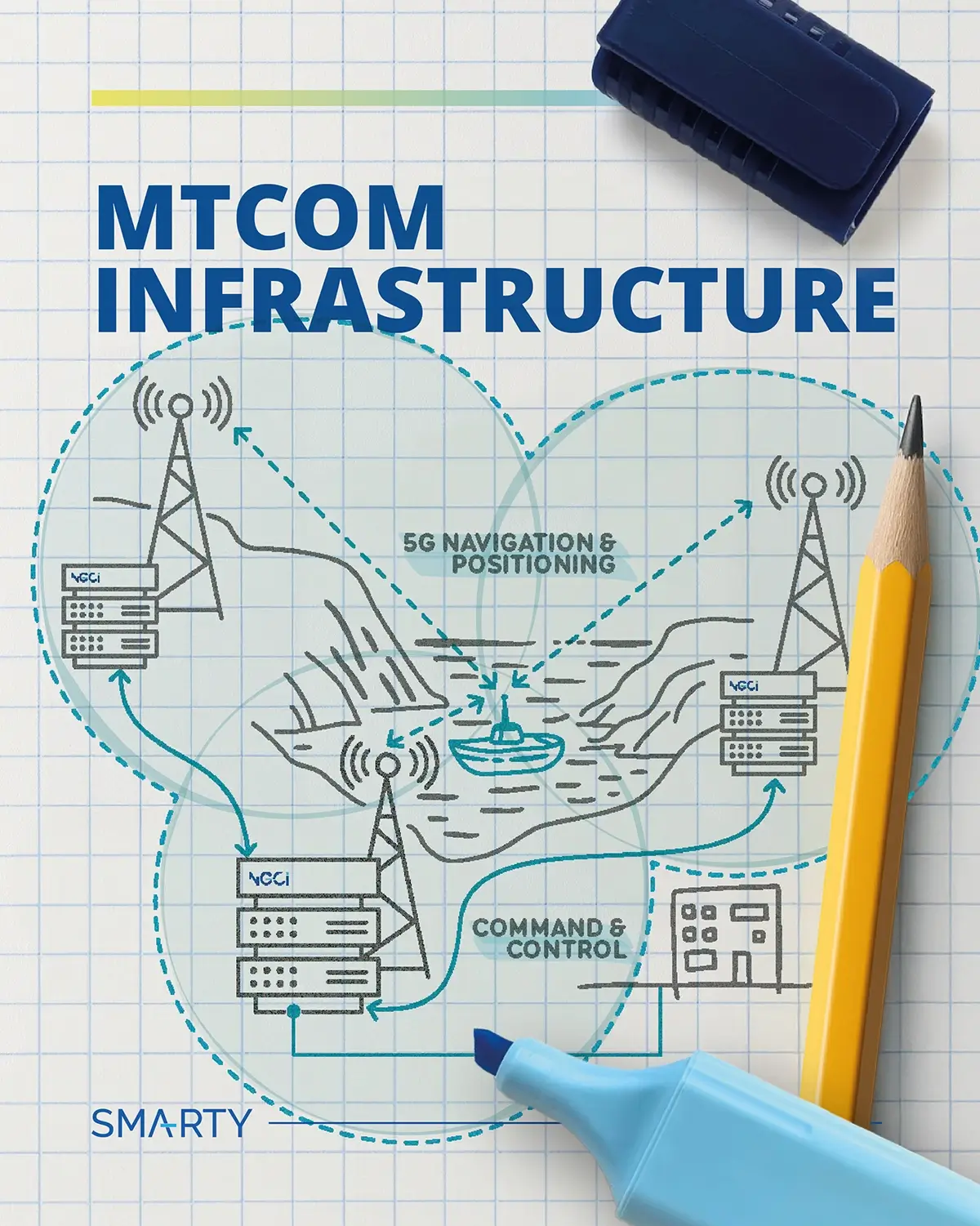
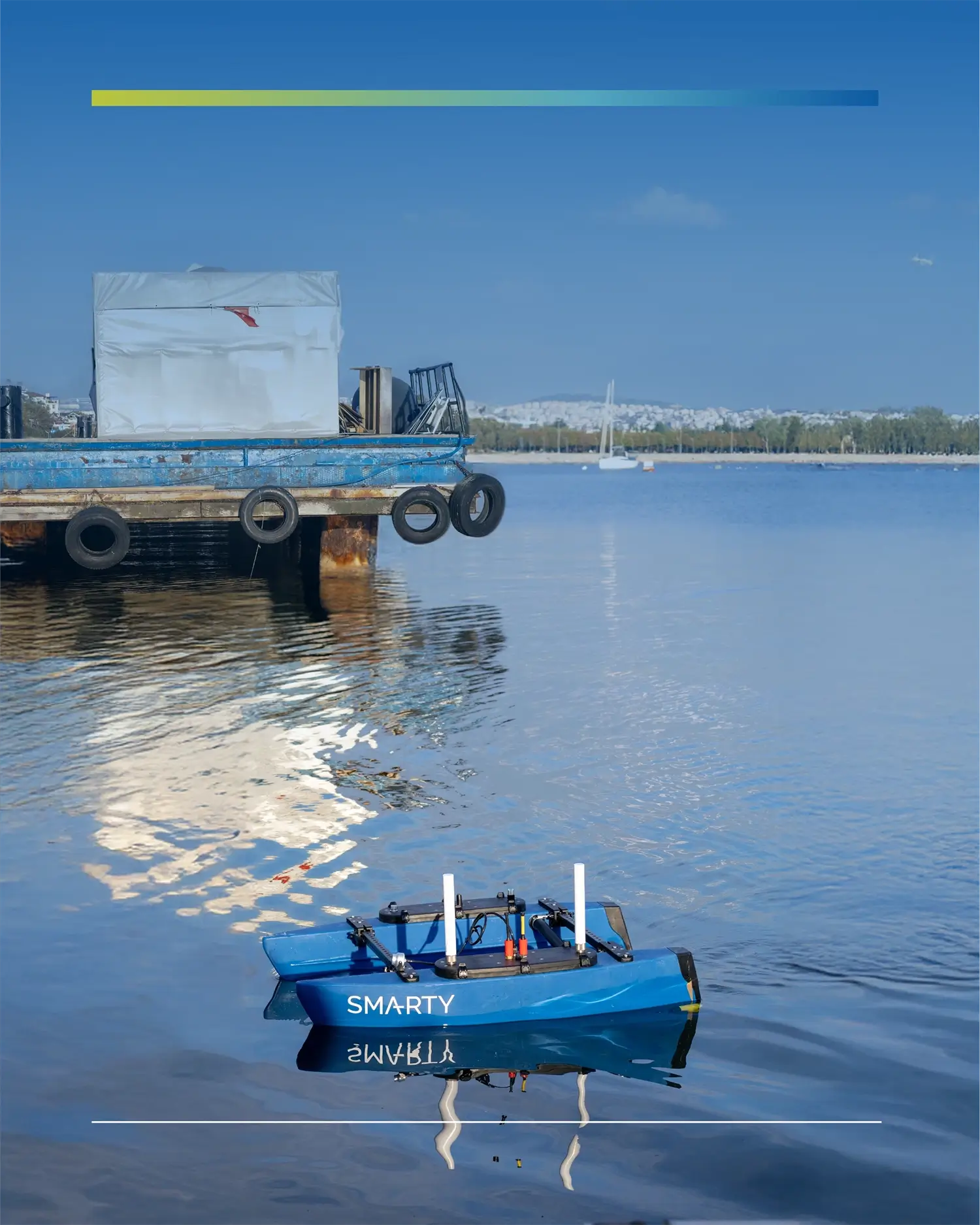
The project is coordinated by SMA-RTY, together with several partners: Infocom, EdgeLab, Sitep, and the University of Genoa; each contributing expertise ranging from network infrastructure to scientific research and experimental validation.
To better understand the work behind the project, we spoke with the people behind the project to learn more about their work and the role they played in MTCOM.
We began with Prof. Mirco Raffetto, researcher at the University of Genoa, whose team studied how electromagnetic waves behave over the sea, a key element in making maritime 5G connectivity possible.
Bridging physics and telecommunications in maritime 5G
Can you tell us a bit more about your research group and the work you do at the University of Genoa?
At the University of Genoa, researchers usually work in specialized groups that focus on specific topics.
In my case, I work on electromagnetic fields, dealing with how electromagnetic waves behave, both in teaching and research. My group currently consists of three researchers working on this topic. Within the MTCOM project, however, we also collaborated with two colleagues from the telecommunications group: Raffaele Bolla and Roberto Bruschi.
Their expertise focuses on telecommunications systems, while my work deals with the physical layer, meaning the behavior of electromagnetic waves that enable radio communications.
So, what made you decide to join MTCOM after SMA-RTY reached out?
There were two main reasons.
First, the maritime environment is strategically important for the University of Genoa and for the local territory. Any research activity related to the sea is therefore particularly relevant for us.
Second, the project itself was perfectly aligned with our research interests. MTCOM involved studying radio links between a base station and a naval drone, which directly relates to electromagnetic propagation, one of our core research areas.
On top of that, the project looked at performance within a private 5G network, which is of strong interest for the telecommunications researchers involved in the project. Therefore, it was quite natural joining MTCOM.
Understanding signal behavior over water
What did your research activity actually involve within the project?
One of the main objectives of MTCOM was to understand what kind of performance you could get by connecting a naval drone to a base station through a 5G radio link.
Our focus was on the physical behavior of that link, especially how electromagnetic waves travel over the sea, which is actually quite a challenging scenario.
Challenging? What makes the sea tricky?
When a signal travels over the sea, it does not only follow a direct path between the base station and the drone.
Part of the signal is also reflected by the surface of the water. These reflections create multiple propagation paths that can interfere with the direct signal and potentially degrade the quality of the communication.
In practice, the sea acts like a giant reflective surface interacting continuously with the radio signal.
So your research basically focused on understanding these signal variations?
Exactly. To study this phenomenon, we developed a simulation tool that estimates the received signal power in these types of radio links.
It takes into account the reflections and propagation characteristics typical of maritime environments, helping us to model the behaviour of the link between the base station and the naval drone.
This type of analysis is crucial to maintain the radio link strong and stable. If the received signal power becomes too low, the communication cannot sustain the high data rates needed for broadband systems like 5G.
What results came out of your work?
The main outcome of our work is the simulator itself, which can predict the performance of radio links between a coastal base station and naval drones.
Engineers can use it to estimate signal strength under different conditions and therefore design communication systems before physically deploying them in the field.
From simulation to reality: validating 5G at sea
And is the simulator reliable?
We will tackle this point in the next step, which is particularly important: the experimental tests carried out at sea will generate real measurement data, which will then be compared with the simulator’s predictions. If they match, it’ll confirm the model’s reliability.
Once validated, this tool becomes quite valuable because it allows simulating scenarios and designing systems without always relying on expensive field tests.
What do you personally take away from participating in this project?
For researchers, one of the most exciting things is closing the loop between theory and experimentation.
In many research projects, universities focus on developing models and simulations, but they rarely have the opportunity to see those models tested in real operational environments.
In this case, thanks to SMA-RTY and the other partners, the project is progressing all the way to real-world experimental validation. That kind of feedback is gold from a research perspective.
How did you find working with the partners?
The collaboration was excellent. SMA-RTY was our main interface in the project since they managed the private 5G network and integrated the radio link into the system.
Deadlines were respected, the work was well organized, and the coordination was very professional. Honestly, this level of organization isn’t always common in research projects, so it was really appreciated.
All in all, it was a very positive collaboration.