
mmWave and beamforming for high-speed 5G
Ever experienced signal drops on high-speed trains or vehicles? The culprit is high dynamic mobility, which challenges even the most advanced wireless networks. The MARPA project, led by SMA-RTY in collaboration with Università degli Studi di Modena e Reggio Emilia (UNIMORE), is exploring a related challenge: investigating how advanced 5G technologies can improve connection stability in high dynamic mobility scenarios.
How 5G mmWave Solves High-Speed Mobility Challenges
The solution may lie in millimeter waves, or mmWave, a 5G technology operating at extremely high frequencies (30–70 GHz). mmWave enables ultra-fast, high-capacity connections, perfect for applications that demand massive data transfers, such as connected vehicles and autonomous systems.
However, mmWave signals are sensitive to obstacles and have a limited range. How can we make them reliable in high-speed scenarios?
Multimodal Tracking for Stable 5G
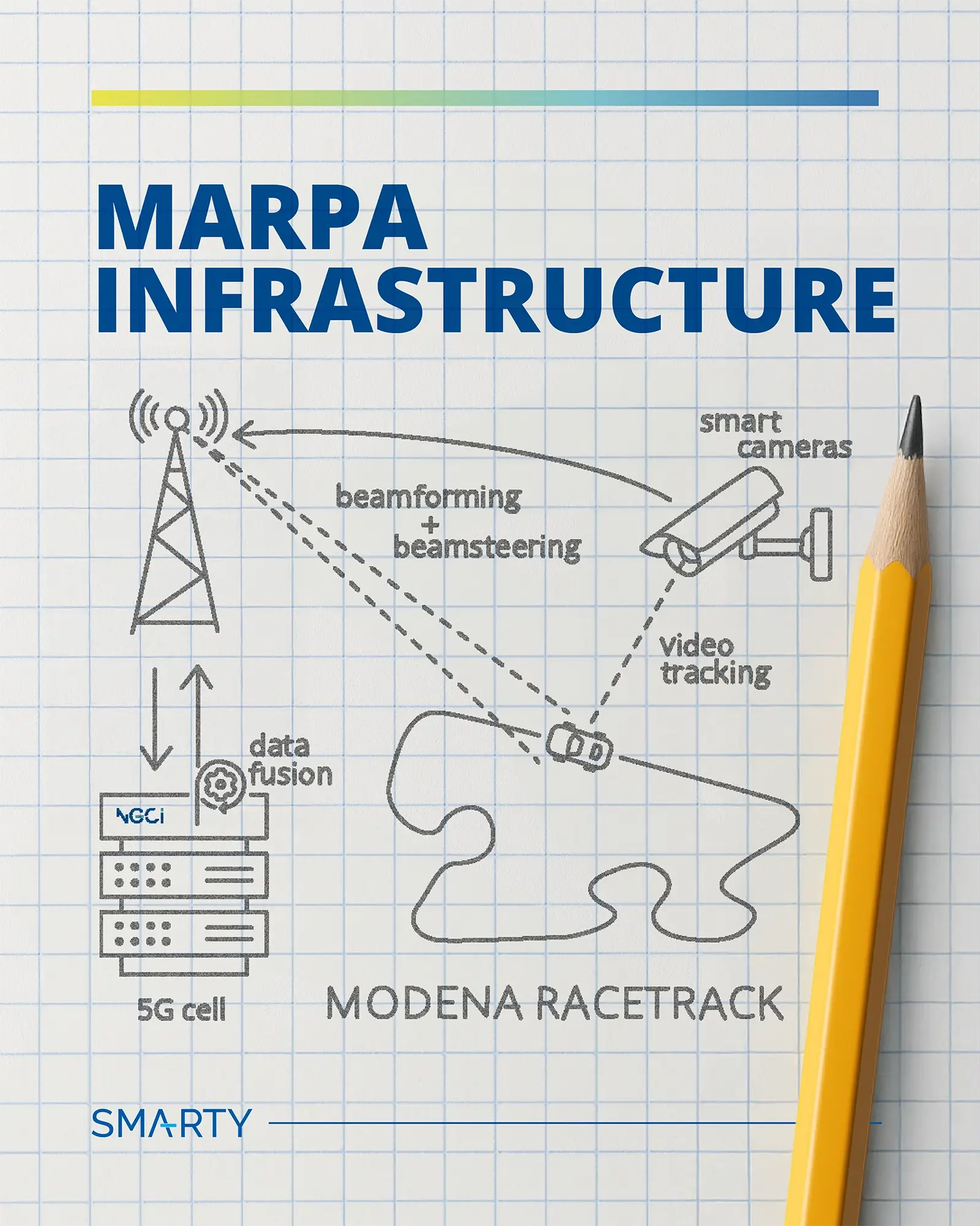
At the Modena racetrack, SMA-RTY will be testing a unique high-speed connectivity setup that combines:
- mmWave antennas
- smart cameras
- data fusion
These 5G antennas rely on two key technologies: beamforming, which focuses the radio signal in a specific direction to strengthen it, and beamsteering, which dynamically adjusts the signal direction to follow a moving device.
Meanwhile, the camera provides visual tracking data of the car. Both data streams are processed together through NGCI in a data fusion approach, enabling multimodal tracking: the vehicle is tracked simultaneously by the antennas and the cameras, with each data source supporting the other.
It’s like one senses while the other sees, by combining both, the system gains a more complete picture of the car’s position. This precise tracking keeps the connection stable even at high speed and improves signal quality, allowing the antenna to maintain strong, reliable communication throughout the track.
MARPA Applications: From Mobility to Smart Infrastructure
The project’s potential applications are broad:
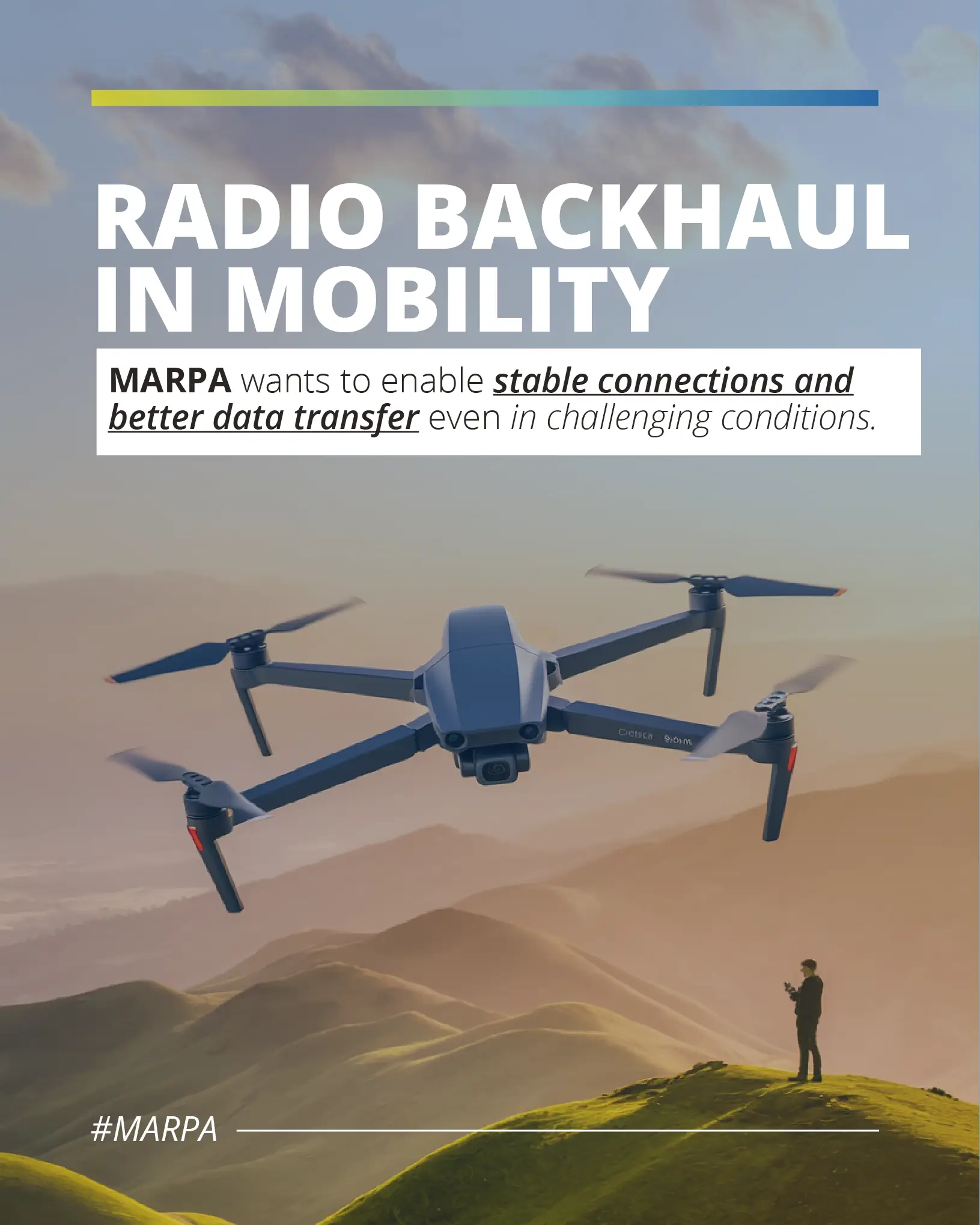
- Radio Backhaul in Mobility
MARPA can support wireless radio backhaul links in dynamic scenarios, where traditional infrastructure is not enough. By improving beam accuracy and tracking moving nodes, it enables stable, high-capacity backhaul connections between mobile or temporary radio units and the network core, even under high-speed or rapidly changing conditions.
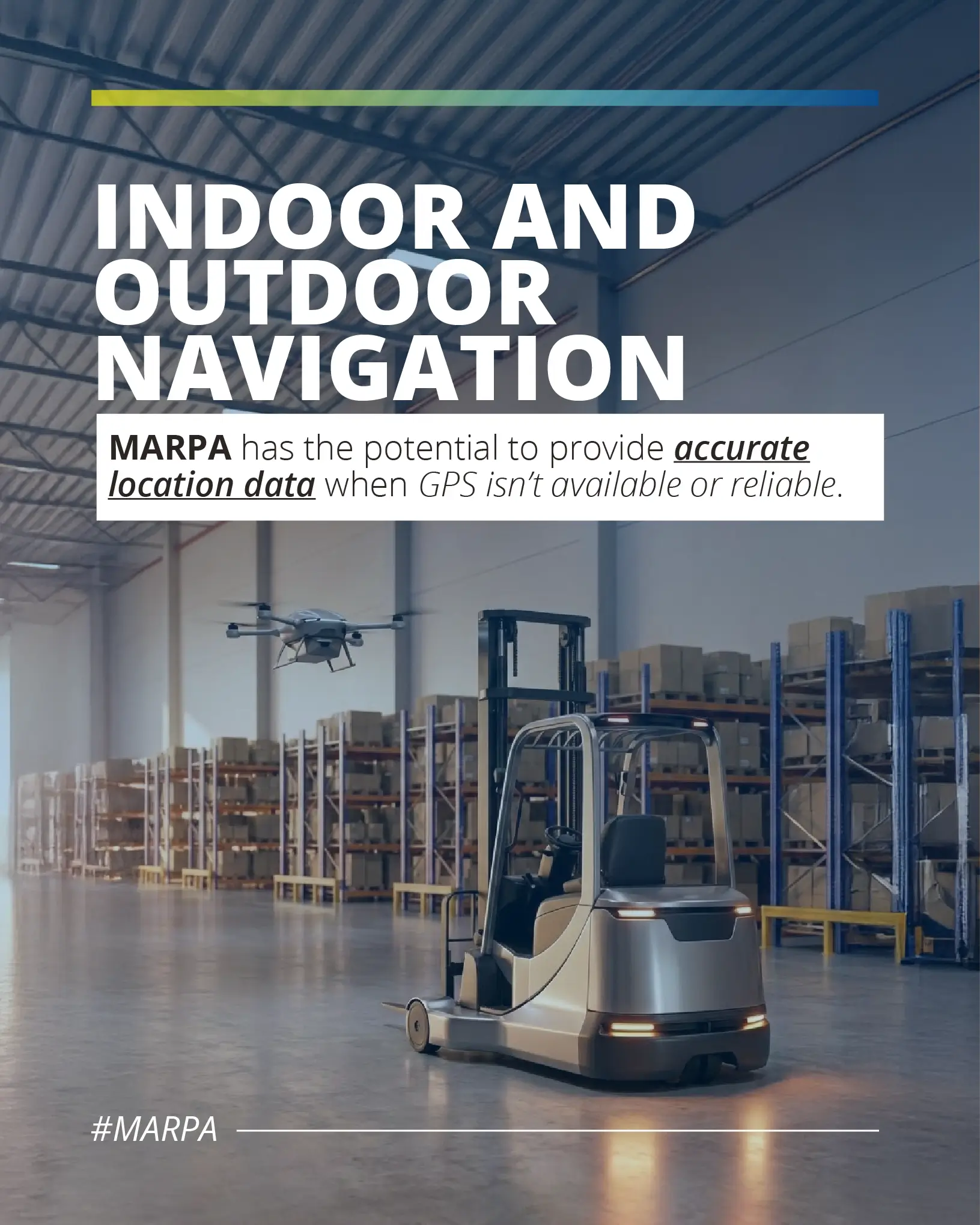
- Indoor and Outdoor Navigation
When GPS signals are weak or unavailable, MARPA’s multimodal tracking can provide highly accurate positioning. By combining radio signals and visual tracking, the system can guide vehicles or mobile robots in complex environments, from city streets to indoor facilities, ensuring reliable location data at all times.
Other key applications of the MARPA project include:
- Autonomous Vehicles
Accurate, real-time positioning is essential for autonomous driving. MARPA enhances vehicle localization by integrating mmWave-based tracking with camera data, offering robust support for navigation, collision avoidance, and smart mobility applications where safety and precision are critical.
- Motorsport Telemetry and Racing Analytics
In motorsport scenarios such as Formula 1 or other professional racing series, vehicles generate massive amounts of real-time telemetry data. MARPA can support stable, high-capacity wireless links along the entire track, enabling continuous transmission of performance, sensor, and video data even at very high speeds. This ensures reliable data collection for race control, team analytics, and safety systems, without interruptions caused by mobility or rapid signal changes.
The next phases of MARPA will involve the installation of the test infrastructure at the Modena racetrack and the first real-world trials. SMA-RTY and UNIMORE are turning theory into practice, showing how advanced 5G and multimodal tracking can maintain stable connectivity even in high-speed scenarios.
Stay tuned for more updates as MARPA accelerates into the future of mobility.