
MARPA Project: High-Speed 5G Tests in Modena
Multidomain connectivity ensures seamless communication across multiple networks. Through the early-stage MARPA project, SMA-RTY and UNIMORE are tackling high-speed mobile connectivity issues. The system relies on mmWave antennas and intelligent cameras for precise moving vehicle tracking, with the goal of maintaining stable connections at high speeds.
NGCI 5G Node Deployment for High-Mobility Tracking
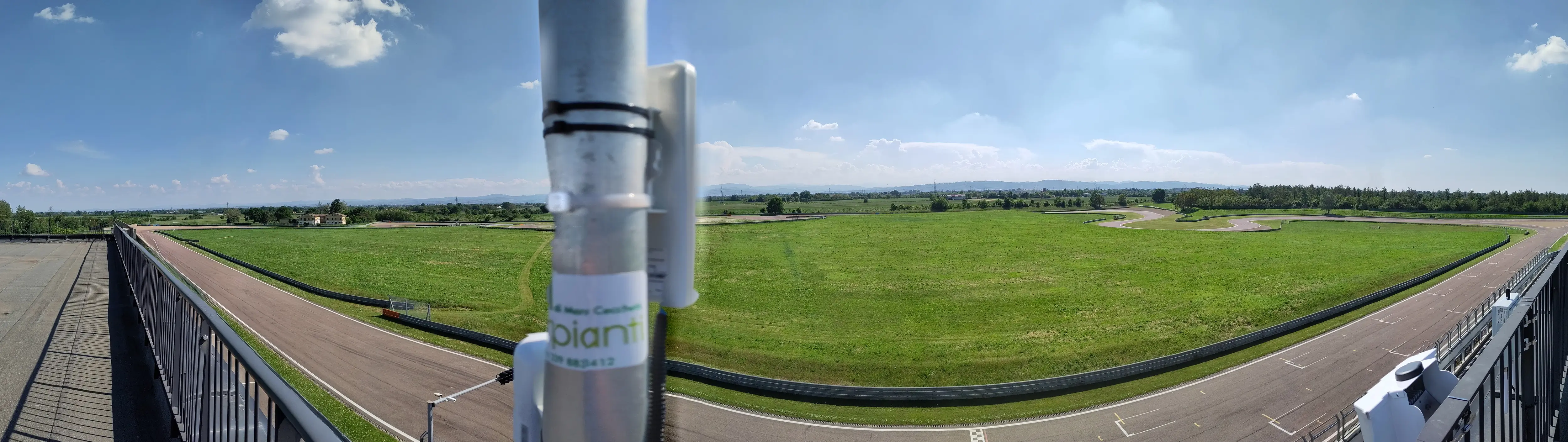
Recently, the MARPA team completed the first on-site phase at the racetrack in Modena. For this step, a standard 5G antenna and an NGCI cell were installed, providing a functional baseline for high-speed connectivity testing. This setup allowed the team to carefully assess coverage, signal stability, and potential interference in a real-world high-mobility environment.
Beyond simply placing the equipment, the installation involved fine-tuning the antenna alignment and network parameters to ensure reliable initial operation. These efforts not only validate the feasibility of the NGCI deployment but also create a controlled environment for integrating more advanced technologies in the next phases, such as mmWave radios and intelligent camera systems.
MARPA Project: Initial 5G Signal Stability Results
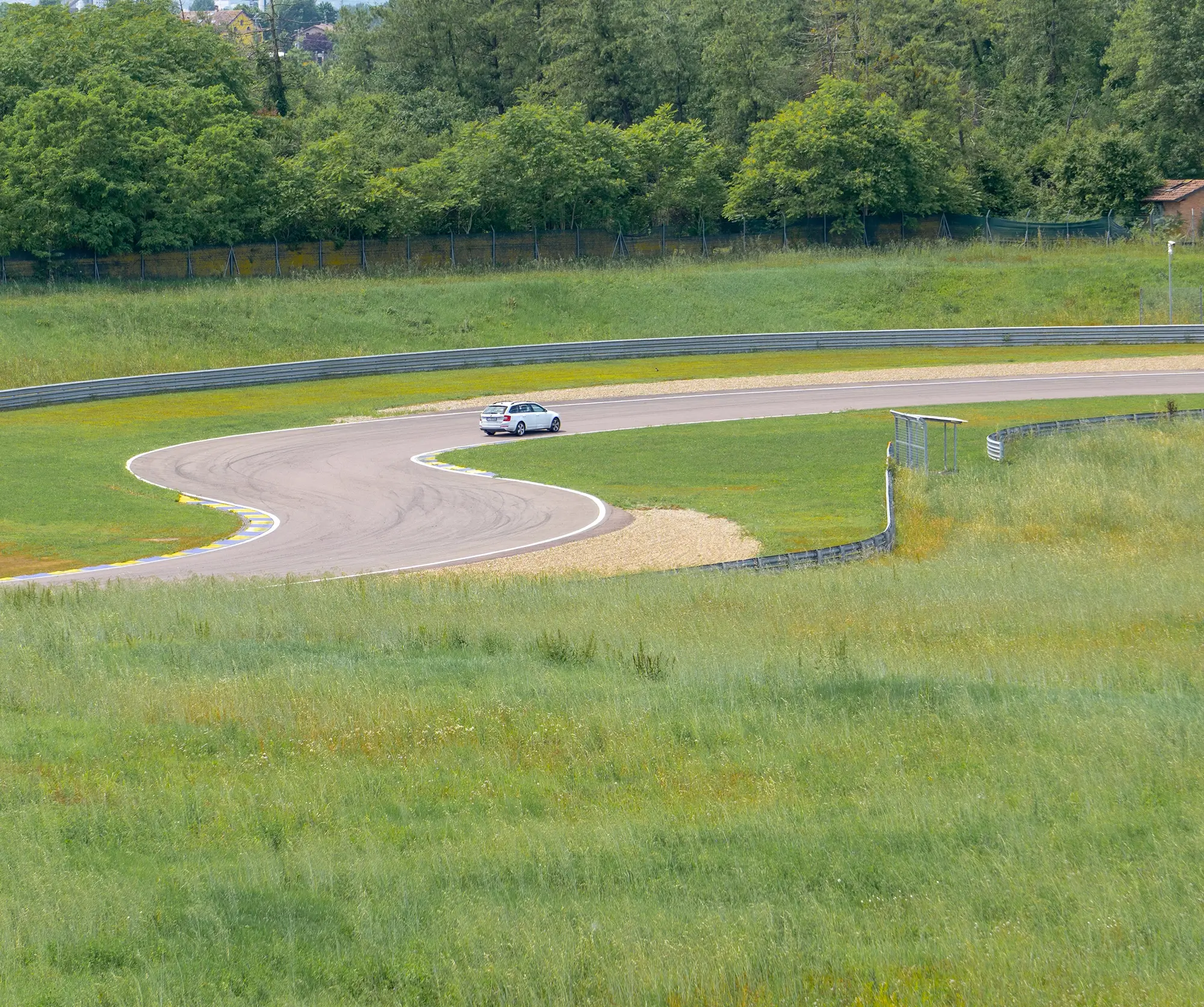
In recent trials, a Škoda Octavia equipped with a receiver antenna completed laps around the Modena racetrack. The connection remained stable throughout, with only minor low-signal zones behind hills. These insights help fine-tune MARPA’s systems.
Building reliable high-speed connectivity is as much about testing and iteration as it is about technology. Sometimes innovation starts with a slow lap and patience.
— MARPA Team
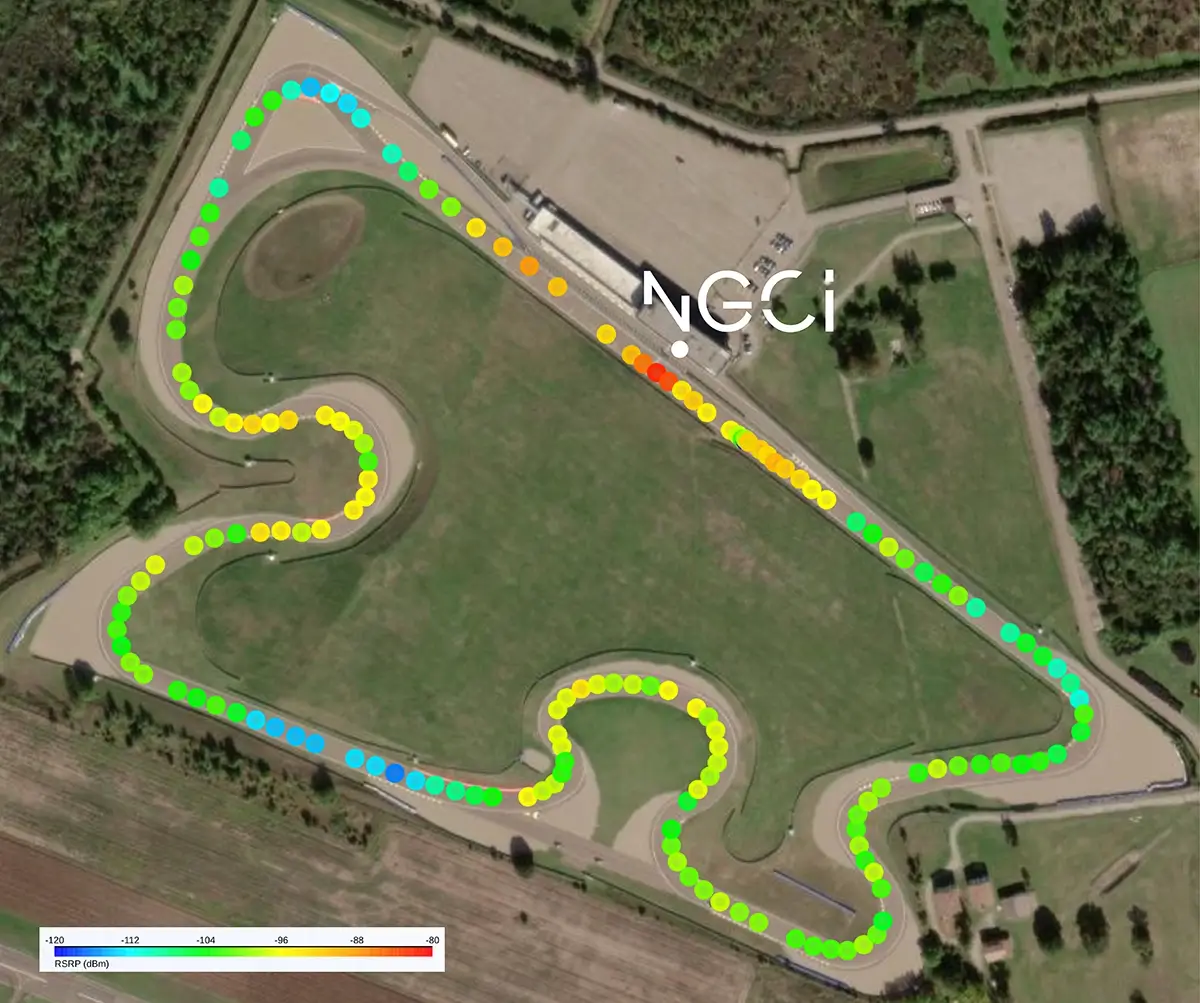
This standard 5G installation provides the baseline for the MARPA testbed. Following data analysis, SMA-RTY and UNIMORE will deploy mmWave radios and intelligent cameras to enable full-scale, multimodal tracking of high-speed vehicles.