
Military 5G in the field: lessons from DiBaX 2026
What happens when a prototype that worked in a field trial has to be trusted by several nations at once? That question ran through the 2nd Military 5G Conference, held in İzmir on 20 November 2026 alongside NATO Edge 26. The conference is organised by the NATO Communications and Information Agency (NCIA) within MN5G (Multinational Collaboration on 5G), which now counts three participating nations and three observers. For the background on the event and how it has grown since the first edition, see our announcement article.
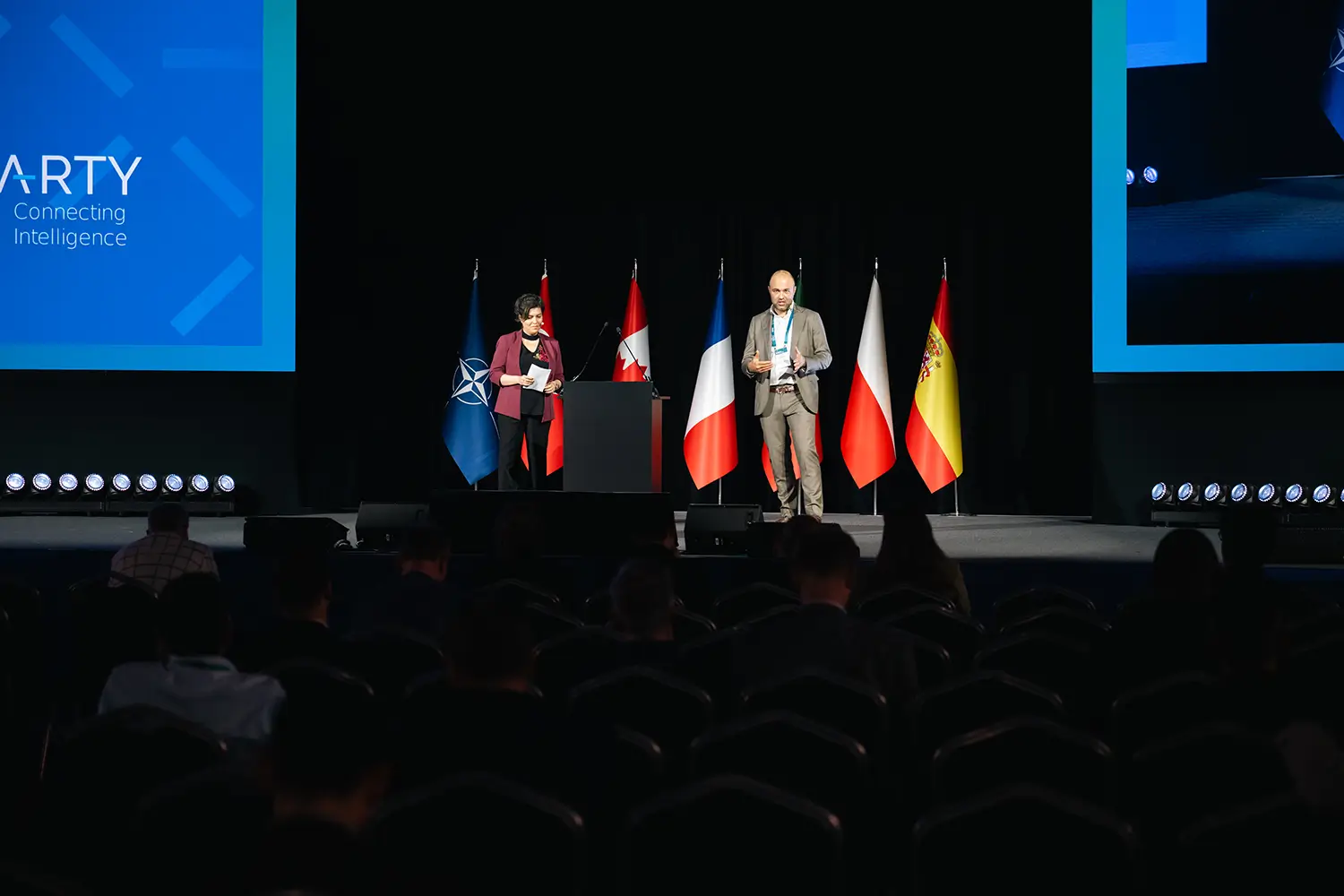
Luca Maggiani took the stage to share what SMA-RTY learned during DiBaX 2026 (Digital Backbone Experimentation), the NATO exercise held in Latvia in October. His talk covered what worked on our NGCI (Next-Generation Communication Infrastructure) private 5G network, where commercial technology still falls short, and what needs to be engineered next. The five use cases we deployed are described in the DiBaX 2026 press release, so here we focus on what came out of them.
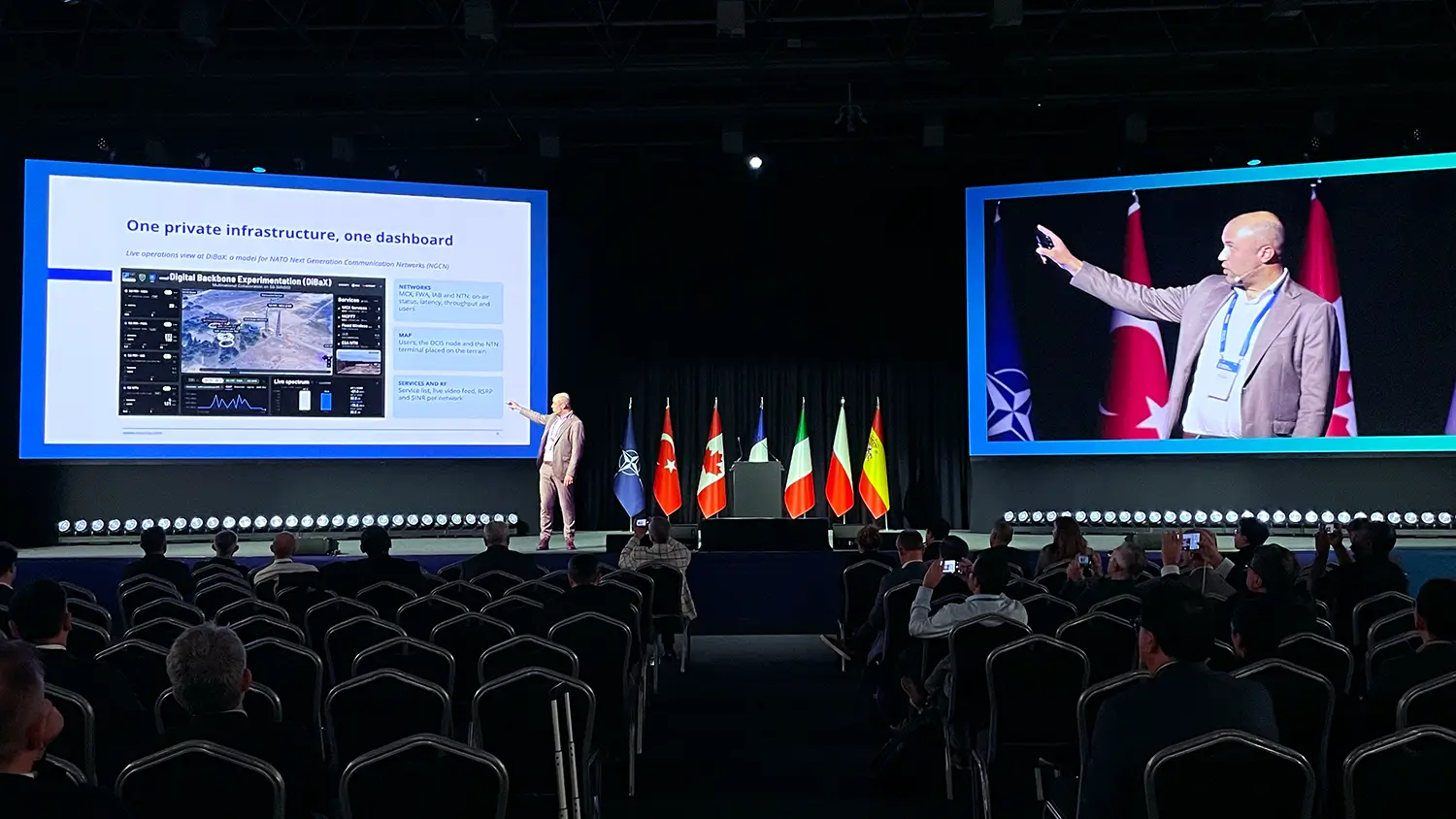
A technology that stays in the lab adds nothing to readiness. Collaboration with industry and across the Alliance is how we get there.
Major General Krzysztof Kociuba, NCIA Chief of Staff
Where commercial 5G falls short in the field
Commercial 5G is designed for stable conditions: fixed power and a radio plan that engineers draw once and rarely touch. Think of a city road network, with permanent signs and traffic lights. A tactical deployment is closer to a convoy that carries its own roads along, in terrain where the radio picture changes faster than anyone can re-plan it by hand. Deployable command posts and unmanned systems have to bring their infrastructure with them.
So what does standalone private 5G still need to work under these conditions? The talk pointed to three gaps that a standard commercial deployment does not close on its own.
- The first is standards and autonomy: defense-grade encryption, mobility beyond line of sight (keeping a connection alive when a unit moves past the horizon of its base station), mesh relays (nodes that pass traffic along to one another) and native satellite integration.
- The second is operational, with strict limits on size, weight and power (SWaP), self-contained energy supply and coordination logic that works without someone adjusting parameters by hand.
- The third is multinational security. When assets from different nations share a network, a zero-trust architecture, where no device is trusted by default and every access is verified, has to span all of them, backed by redundant physical links and shared interoperability profiles across air, ground, maritime and space.
Five military 5G use cases tested at DiBaX 2026
All five use cases were demonstrated live in Latvia, and the results are where the lessons start.
- 5G fixed wireless transport: For the first time in a NATO setting, two deployable communications nodes used a 5G fixed wireless link as their main carrier instead of a satellite. The link was fast enough to carry several sessions at once and ran for many hours without interruption, which says more than a short demo can.
- MCX and TAK on a dedicated slice: Mission-critical push-to-talk voice and situational awareness (TAK, Team Awareness Kit) ran on the same terminal, through a dedicated network slice built for reliable, low-latency traffic.
- Airborne Release 17 IAB relays: 5G Release 17 relays were mounted on drones, both free-flying and tethered, extending the network wirelessly with IAB. The delay stayed low enough to stream live video from the air.
- End-to-end 5G over GEO satellite: A 5G session ran end to end over a geostationary satellite, with the NGCI core at ESA's ESTEC site in the Netherlands and the terminal on an ESA vehicle in Latvia. A satellite that far away adds a noticeable delay, as expected, but the connection held and carried usable traffic.
- Dynamic spectrum management: Under the NCIA Spectrum Broker, the network stopped transmitting within seconds of a channel being revoked and took a little longer to resume on another one.
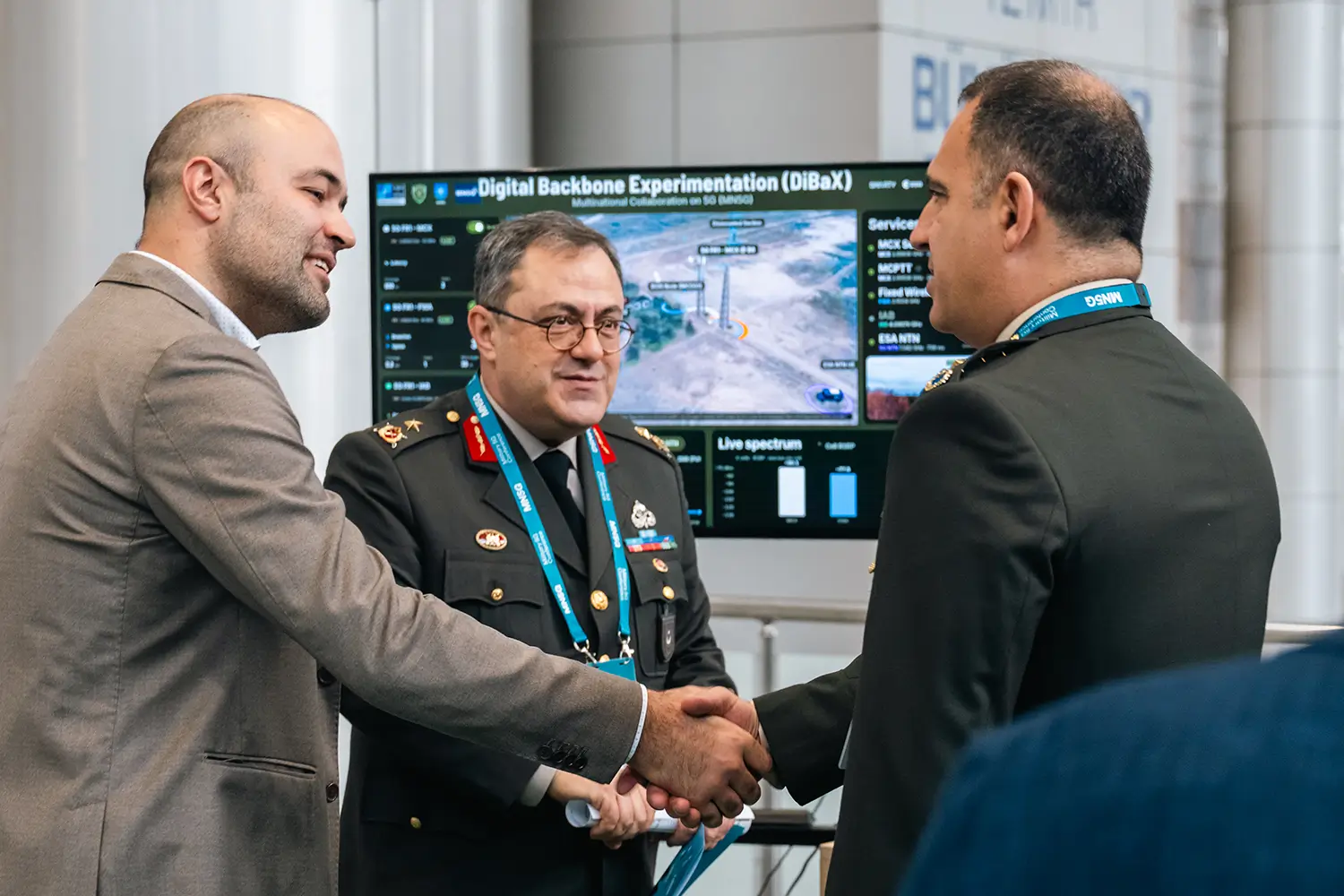
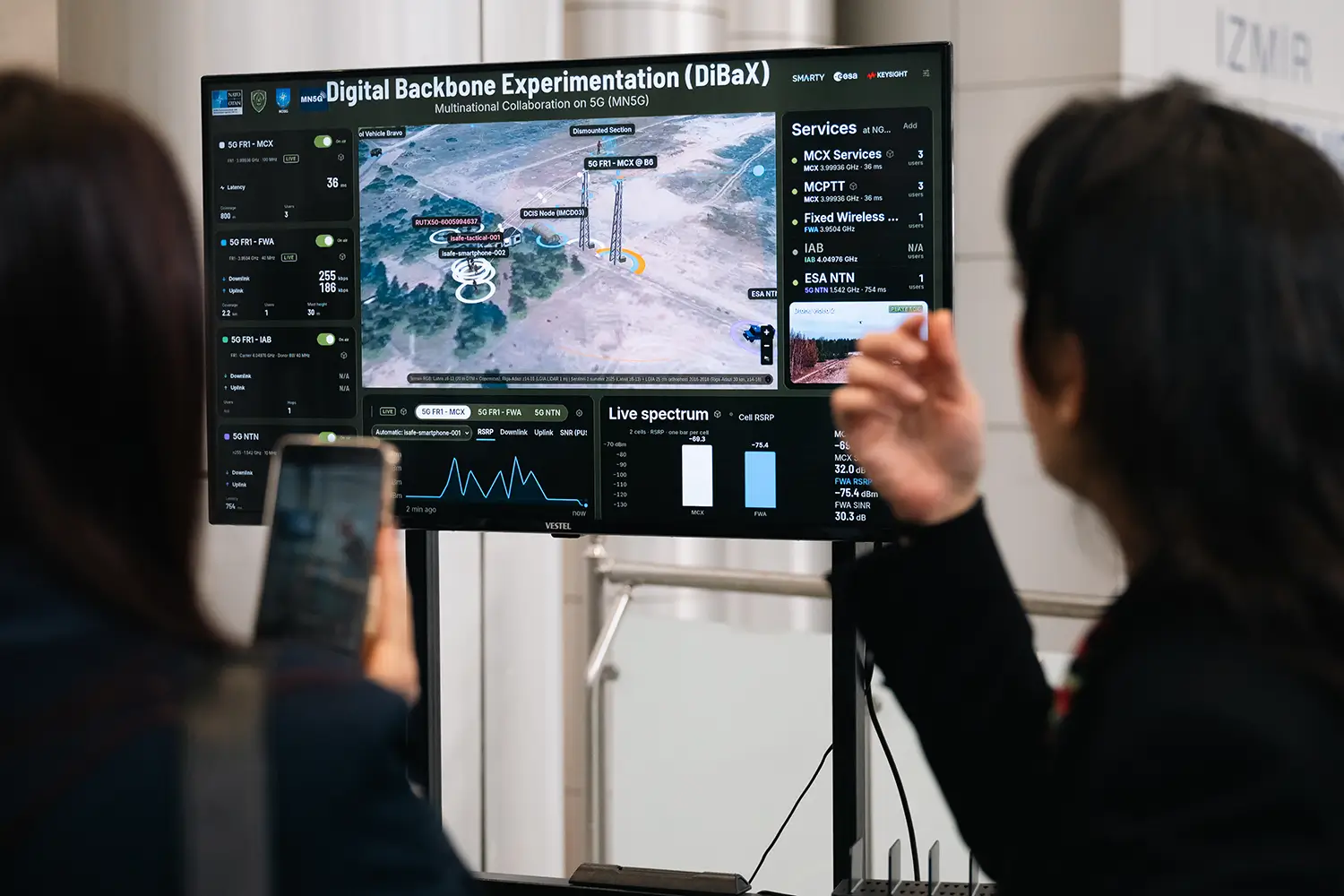
These tests were carried out with NCIA, the NATO Communications and Information Systems Group (NCISG) and ESA, with independent measurements by Keysight Technologies, and were monitored from a centralized dashboard covering networks, tactical map, services and radio parameters.

NATO interoperability, conformance testing and STANAG 5665
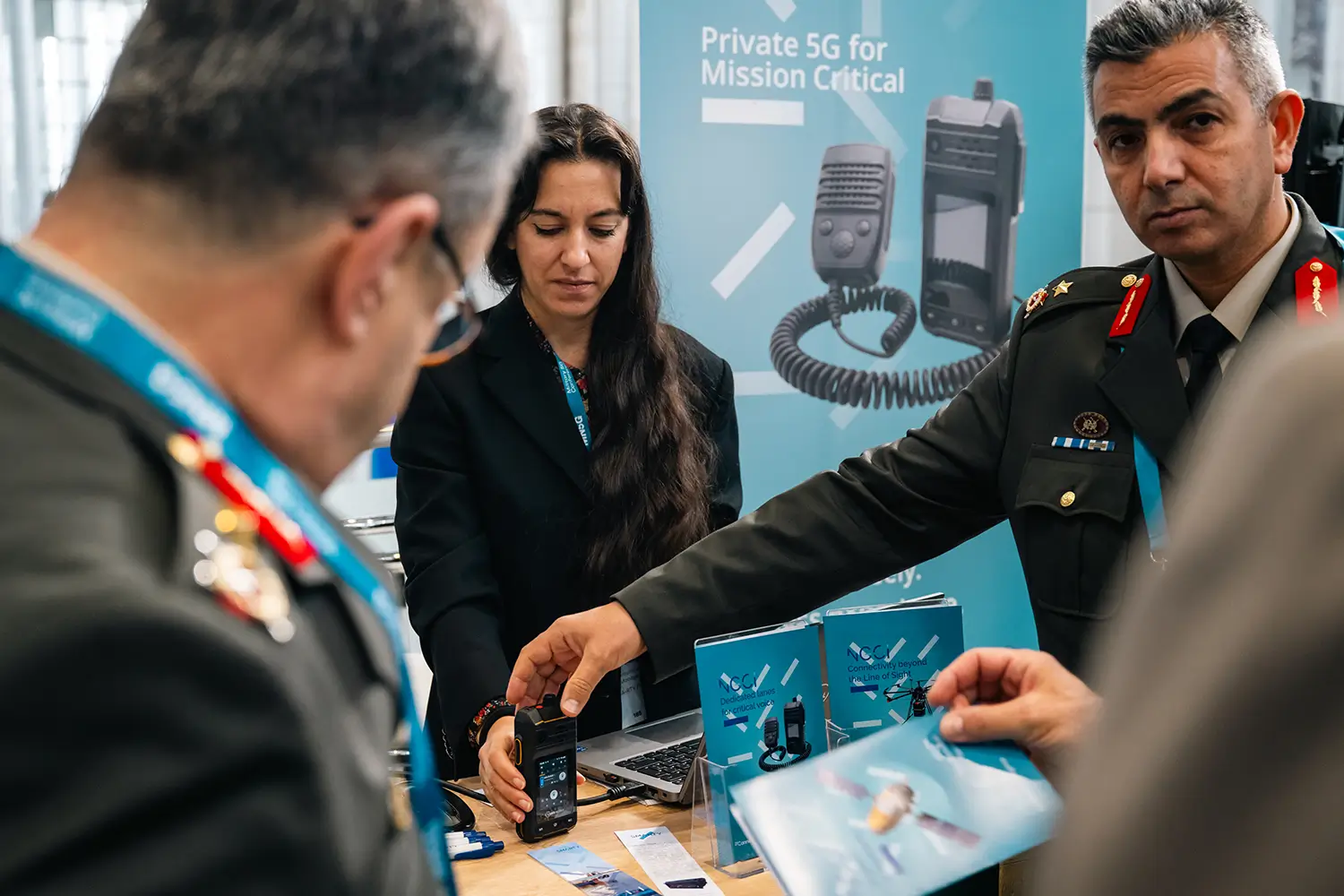
A theme returned throughout the day in İzmir: how do you make sure that systems built by different nations and companies work together without friction? Within MN5G, NCIA is developing the NATO Cellular Conformance Platform, a way to verify whether cellular equipment conforms to NATO defense standards. For the Allies, it provides a shared basis for evaluation, interoperability and procurement.
For SMA-RTY, bringing field evidence from DiBaX, together with an open list of what remains unsolved, is a contribution to MN5G and to the evolution of STANAG 5665 (the NATO Standardization Agreement). It helps keep industry architectures aligned with real operational requirements.
Military 5G roadmap toward DiBaX 2027 and Steadfast Cobalt
Closing his talk, Luca Maggiani outlined three priorities for SMA-RTY's roadmap toward the next multinational cycles, DiBaX 2027 and Steadfast Cobalt:
- Resilience: anti-jamming and electronic-warfare protection (keeping the link up while someone actively tries to disrupt it), interference-aware scheduling, spectrum agility tested against real jammers, and fault-tolerant local cores that keep a site running if it loses contact with the wider network.
- Sensing: Integrated Sensing and Communication (ISAC), evolving the radio waveform so that each node can both communicate and sense its surroundings and the spectrum around it.
- Ubiquity: full-mesh 5G with multi-hop relays across air, ground and surface platforms, with seamless continuity between terrestrial and satellite links.
In her closing remarks, Pinar Yasar Orten, NCIA Head of Next Generation Communications Networks, reminded the room that no single nation, organization or company can deliver military 5G alone. SMA-RTY will carry the open items from İzmir into those next cycles and keep configuring NGCI around each operational need.