
HORUS: Distributed Security Intelligence
As urban and industrial environments become more complex, traditional surveillance systems often struggle to keep up. HORUS offers a new approach: a distributed network of intelligent cameras that monitor, analyze, and predict events in real time, delivering proactive, privacy-conscious security across cities, facilities, and critical infrastructures.
How do we protect without exposing?
In cities and industrial sites, deploying traditional cameras is often limited by privacy concerns, since capturing faces, license plates, or other sensitive details is restricted.
HORUS by SMA-RTY addresses this challenge with a new approach: a network of intelligent, connected cameras that monitor, analyze, and predict events in real time. Using multispectral imaging, HORUS detects movement, heat, and environmental patterns without recording personal identifiers, offering a solution that is both effective and privacy-conscious.
Advanced Multispectral Surveillance
Actually, HORUS goes far beyond a conventional camera system. It is a distributed intelligence network composed of multiple interconnected smart cameras that work together as a cohesive unit.
Leveraging #UnconventionalImaging, HORUS senses a wide spectrum of environmental signals that are invisible to the human eye. This includes thermal patterns, subtle movements, and even variations in airflow, which are analyzed to detect anomalies, anticipate events, and trigger timely alerts. The system is designed to extract meaningful information without ever capturing personal identifiers, ensuring that security and privacy coexist seamlessly.
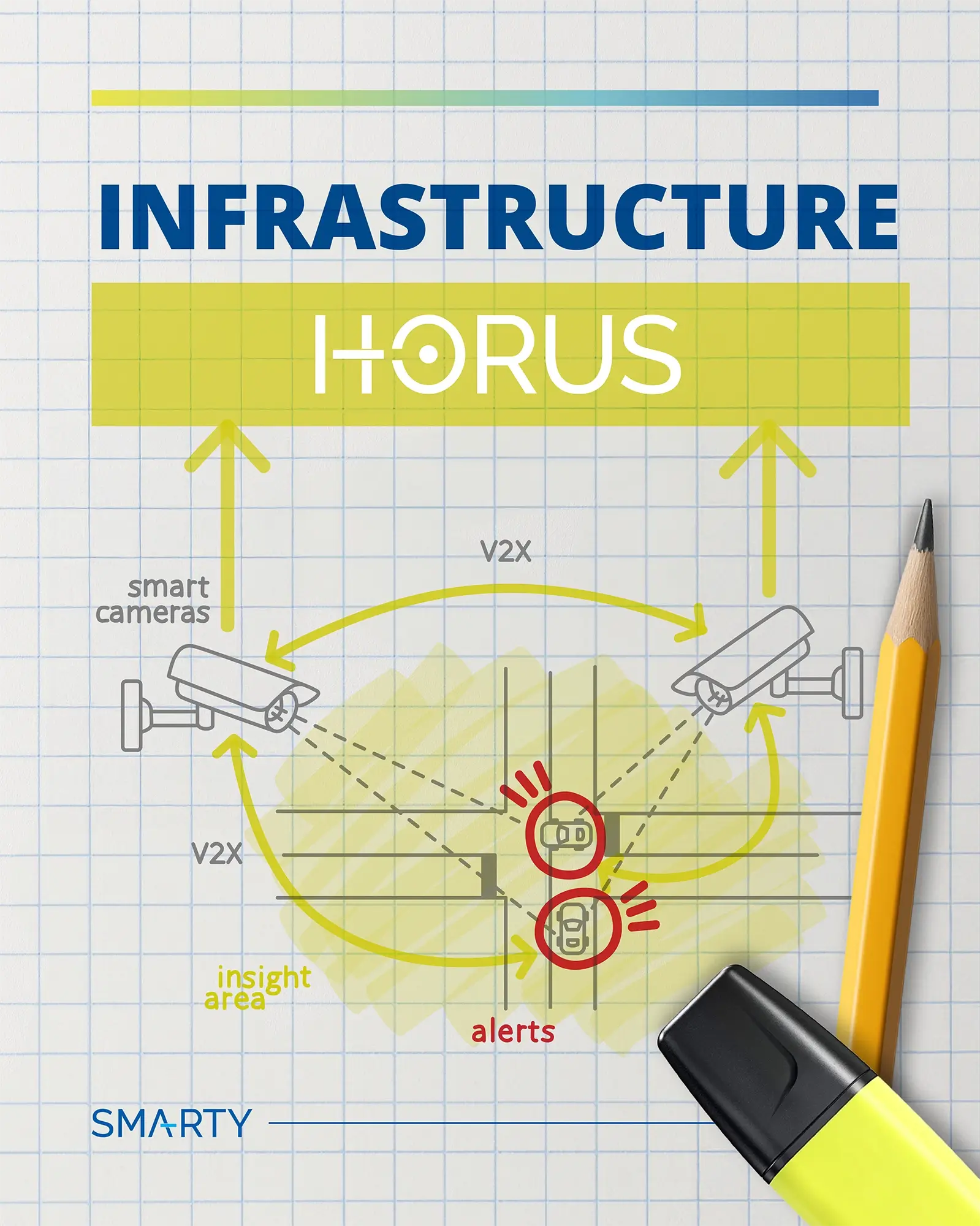
By transforming raw sensor data into predictive intelligence, HORUS allows operators to respond proactively rather than reactively, whether in urban, industrial, or critical infrastructure contexts.
Unconventional Imaging: Seeing Beyond the Visible
In the paragraph above, Unconventional Imaging came up. Let’s take a closer look.
Have you ever wondered how a camera can “see” more than the human eye?
At SMA-RTY, we call this Unconventional Imaging. It’s not just about using advanced sensors, it’s a fundamentally new approach to perception.
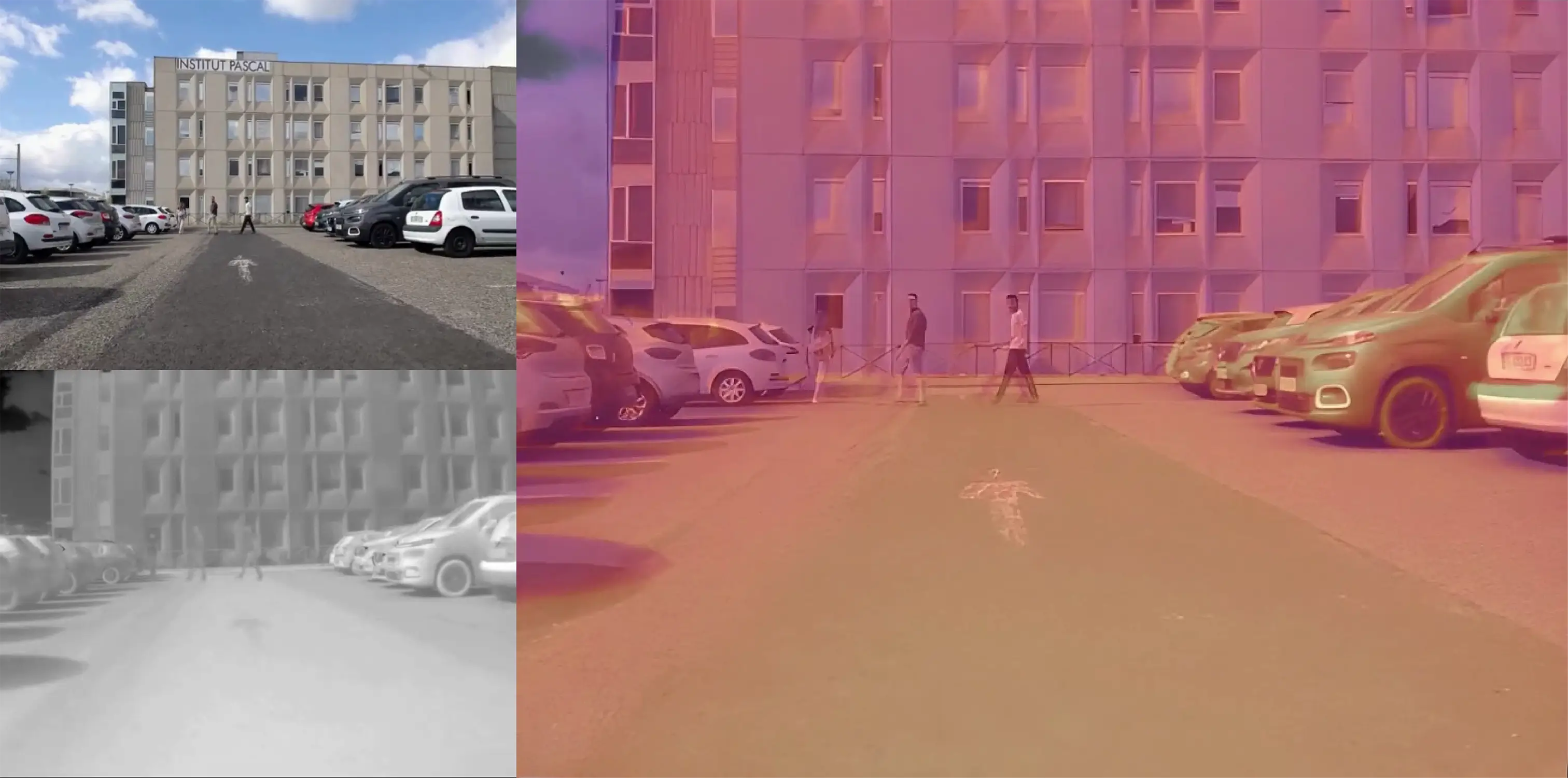
Traditional cameras capture a specific spectrum of light, but each spectrum has limitations. HORUS overcomes these limits by combining multiple layers of information: visible light, infrared, and 3D depth. This multi-layer integration creates a richer, more complete representation of the environment, allowing the system to detect subtle movements, temperature changes, and other signals that would otherwise go unnoticed.
The processing happens directly on the device, as close to the sensor as possible, using custom algorithms that adapt in real time to shifting conditions. Low-power FPGAs ensure this advanced computation doesn’t slow down the system. In essence, Unconventional Imaging gives the cameras “superhuman perception”.
Connected Cameras & Private 5G
HORUS is built as a modular, distributed system of smart cameras, each acting as an autonomous node in a broader network. Every camera is equipped with local processing capabilities, enabling it to analyze visual and environmental data on-site before sharing insights with neighboring units. This edge computing approach reduces latency, increases responsiveness, and minimizes the amount of raw data transmitted across the network.
The cameras are interconnected to form a cooperative intelligence network, where each node communicates continuously with others. This design ensures complete coverage of large areas—urban streets, industrial perimeters, or critical infrastructure—without blind spots. When one camera detects movement, heat anomalies, or other signals, the entire system can react in real time.
Integration with NGCI, SMA-RTY’s private 5G network, adds another layer of speed, security, and scalability. The high-bandwidth, low-latency connection allows HORUS to handle multiple simultaneous streams, coordinate alerts instantly, and maintain robust operation even in complex or dynamic environments.
Predictive & Automated Security
In essence, HORUS isn’t just a cameras network: it’s a fully connected surveillance infrastructure, combining smart sensors, local intelligence, and secure 5G communication to turn real-time data into actionable insights for both urban and industrial applications.
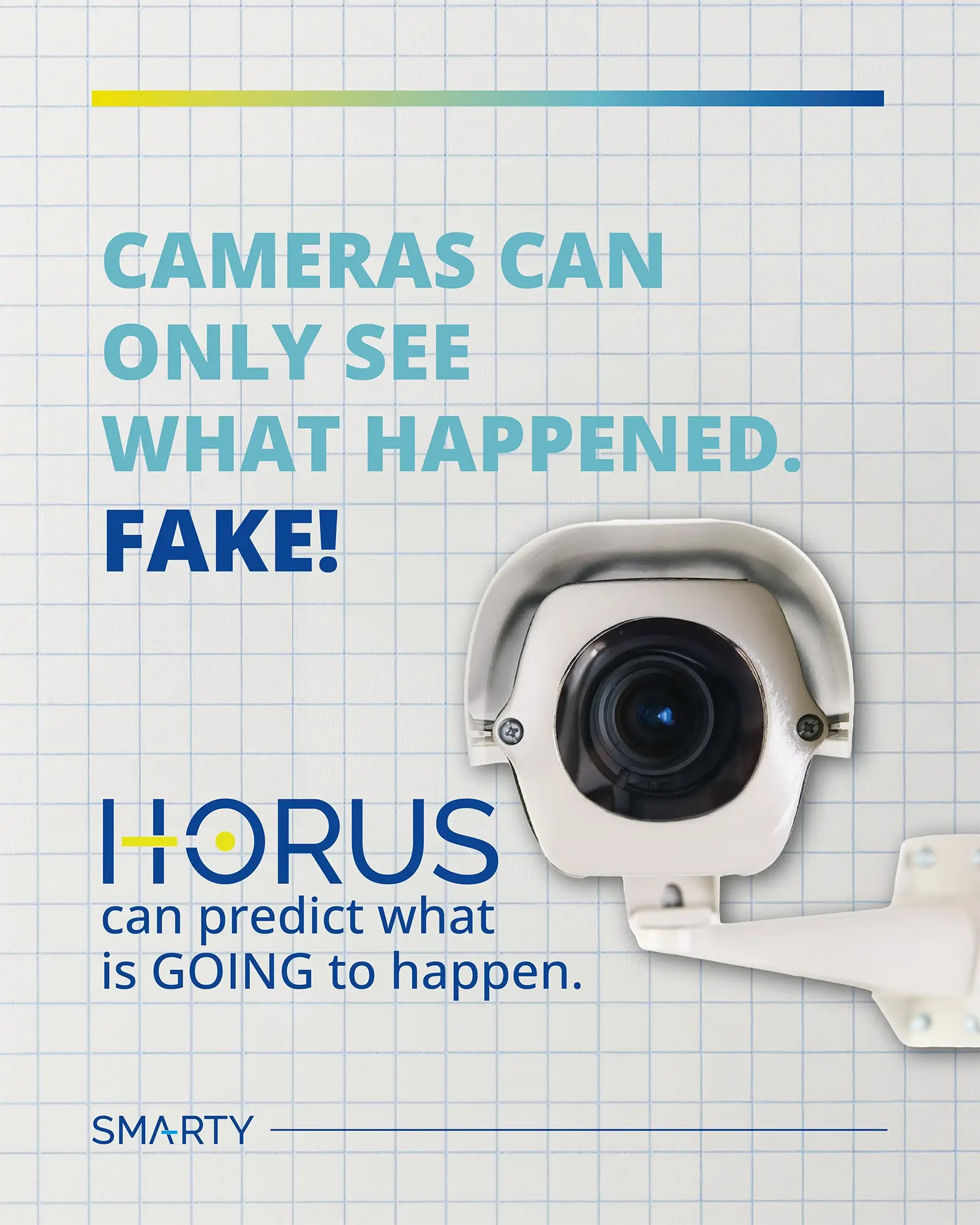
Unlike traditional systems that focus on recording what happens, HORUS actively understands the scene. Each camera analyzes movements, thermal variations, and airflow patterns, then shares this information across the network. This creates a cooperative, predictive intelligence layer that can detect potential threats, intrusions, or environmental hazards before they escalate into critical situations.
Key capabilities of HORUS include:
- Advanced Sensing & AI: Identifies anomalies or suspicious activity in real time to anticipate potential risks.
- Distributed Camera Control: By synchronizing its cameras, HORUS enables full and efficient perimeter monitoring.
- V2X communication: Connects with vehicles and infrastructure to provide a real-time overview of urban mobility.
- Thermal and airflow analysis: Identifies irregular patterns to provide early warnings of environmental risks.
By turning observation into prediction, HORUS moves beyond passive surveillance. It provides proactive situational awareness, allowing operators to act decisively and reduce risks in urban, industrial, and critical environments.
Urban, Industrial & Environmental use cases
HORUS can be applied in many different contexts, always with the goal of making environments safer without compromising privacy. Here are a few examples of how it can make a difference:
- Urban Safety: HORUS can monitor public spaces in real time, detecting unusual movements or situations without ever recording personal identifiers. Imagine a busy city square or a park at night: the system can help authorities respond quickly to potential hazards while respecting everyone’s privacy.
- Industrial & Critical Sites: In large facilities or sensitive areas, keeping track of all entry points can be challenging. HORUS helps automate perimeter surveillance, coordinating multiple cameras to cover wide areas and alert operators to potential intrusions, reducing reaction times and improving overall security.
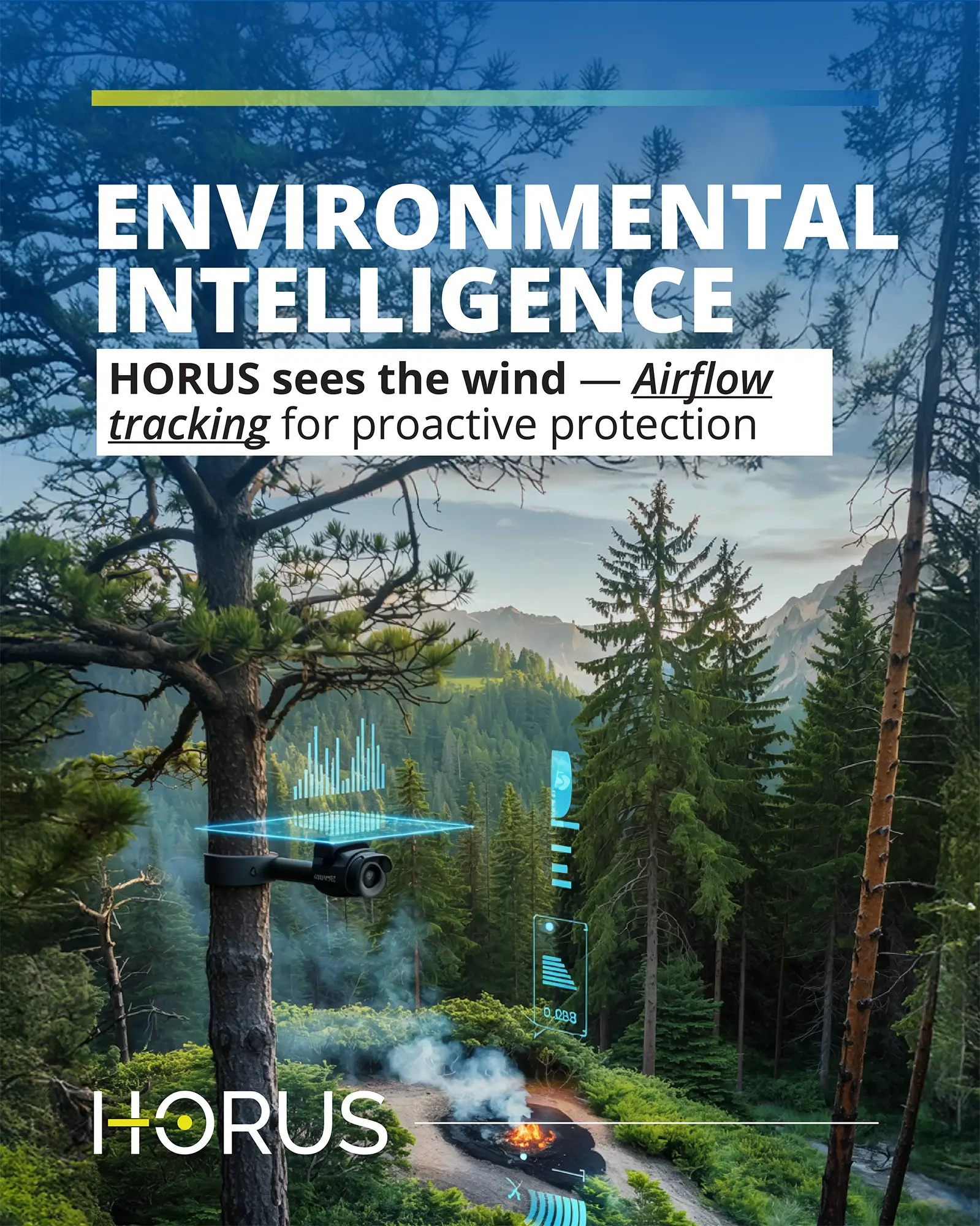
- Environmental Intelligence: HORUS is also capable of monitoring environmental conditions. By detecting subtle thermal anomalies and tracking airflow patterns, it can anticipate events like fires before they escalate, giving responders valuable time to act and potentially prevent damage.
- Smart Mobility: HORUS can communicate with vehicles and infrastructure to predict traffic congestion or potential accidents, helping make roads safer. This is particularly useful in complex urban areas where quick decisions can prevent incidents and improve traffic flow.
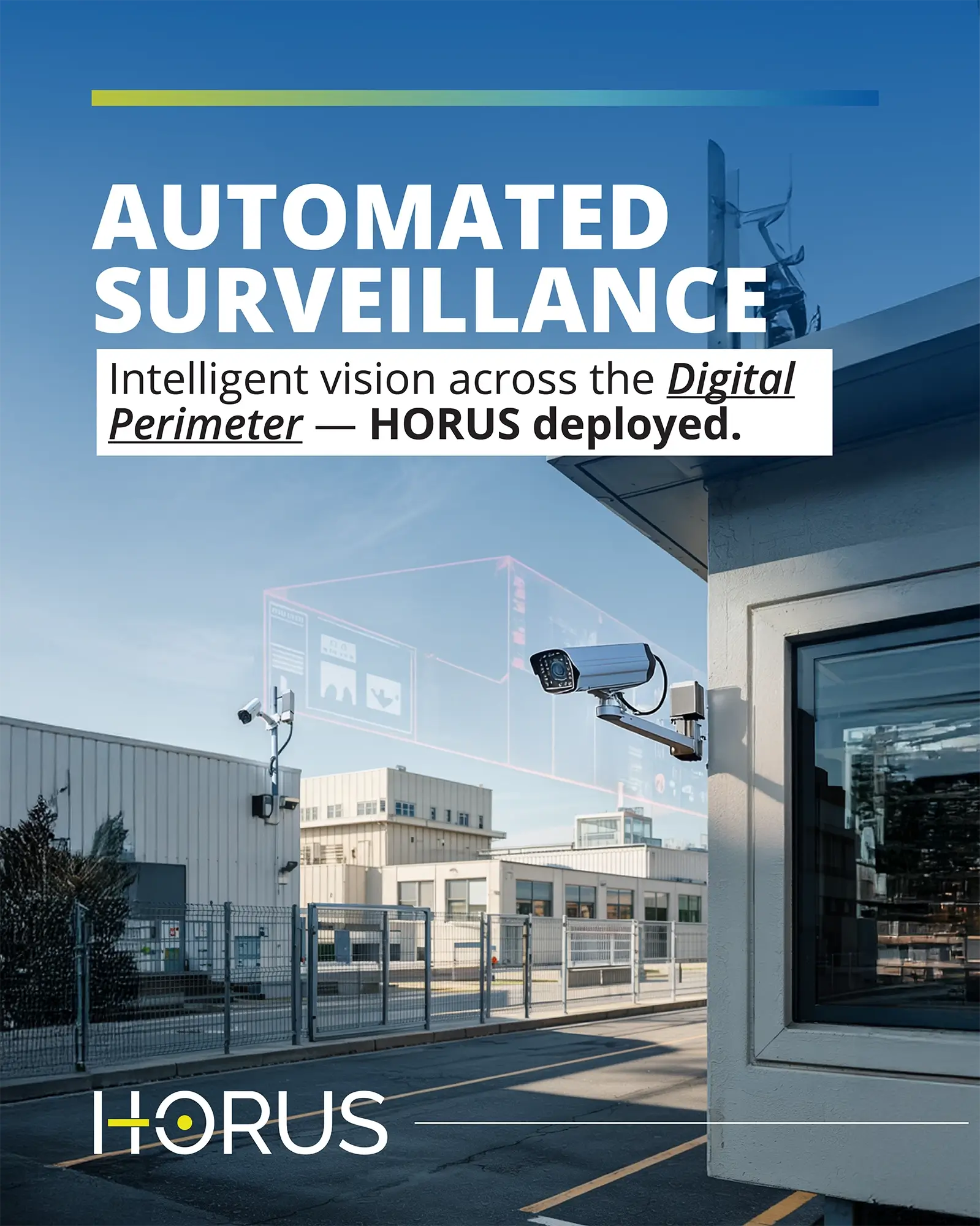
HORUS combines AI-powered analysis, connected cameras, and private 5G networks to deliver a privacy-first, proactive approach to security. It doesn’t replace human judgment, but provides tools to see more, understand more, and act faster, and in doing so, represents the culmination of SMA-RTY’s expertise in perception, connectivity, and intelligence, transforming data into actionable insights for smarter, safer environments.