
NATO Digital Foundry Launches in The Hague
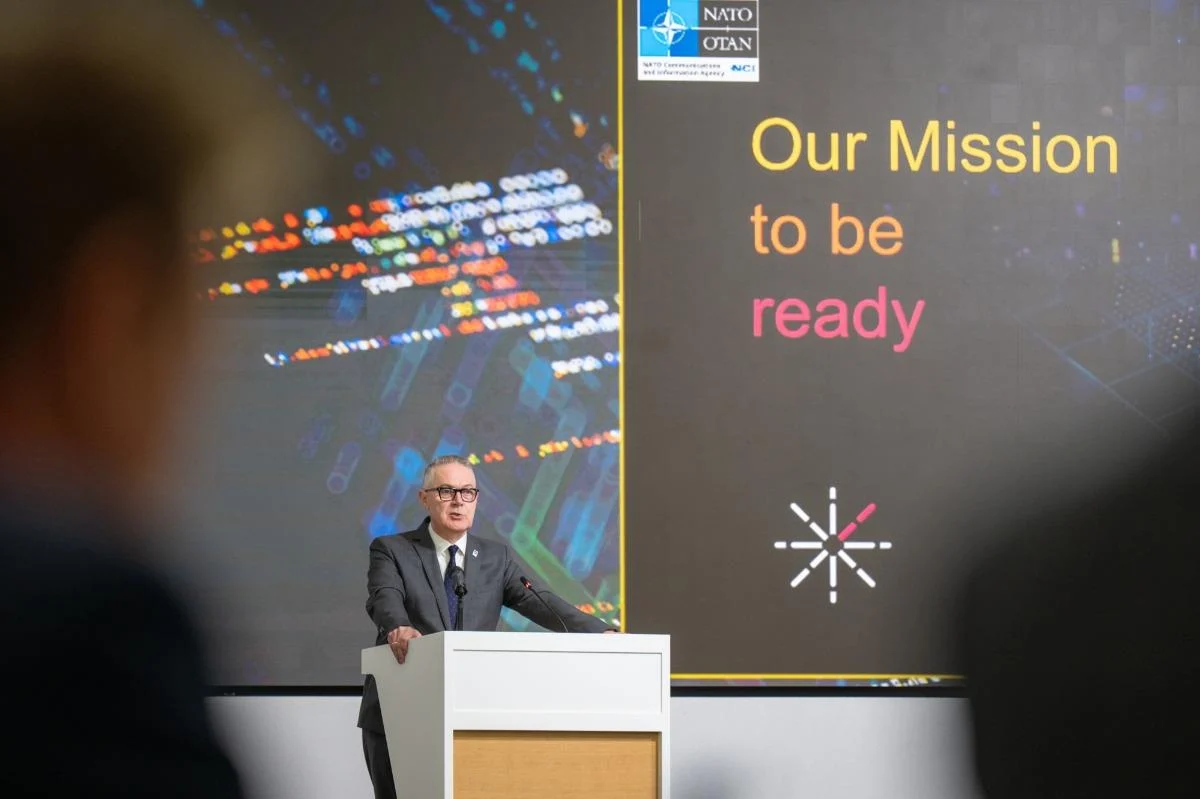
From 9 to 11 December, The Hague hosted the launch of the NATO Digital Foundry (NDF), officially announced on 10 December at the campus of the NATO Communication and Information Agency (NCIA).
The event brought together NATO entities, member nations, partners, and industry stakeholders, marking a significant moment in the evolution of NATO’s digital innovation strategy.
What Is the NATO Digital Foundry?
The NATO Digital Foundry is an open and secure innovation platform designed to support the development, testing, and scaling of emerging and disruptive technologies. Its objective is to reduce the time needed to move from concept to operational capability, enabling faster adoption and continuous innovation across the NATO Enterprise.

Shared Infrastructure for Faster Innovation
At its core, the Digital Foundry provides a shared infrastructure of data, tools, expertise, and testing environments. By interconnecting laboratories and innovation ecosystems across the Alliance, the platform creates a common space where experimentation can be carried out more efficiently, while ensuring interoperability and high security standards.
From Experimentation to Capability
Data plays a central role in the Digital Foundry’s vision. NATO increasingly views data as a strategic asset for decision-making and operational effectiveness. Within this context, the Alliance Data Sharing Ecosystem (ADSE) serves as NATO’s data-sharing framework for the Alliance and its partners, enabling secure and trusted data exchange across the NATO Enterprise.
Data as a Strategic Asset
While the Innovation Continuum (the NATO program SMA‑RTY participated in this year) focuses on fostering collaboration and experimentation, the Digital Foundry strengthens the infrastructure required to sustain innovation over time. Together, the two initiatives form a more integrated ecosystem that supports the transition from experimentation to deployable, operational capabilities.
Security by Design
Security and cybersecurity are foundational elements of the Digital Foundry. Shared digital environments must be secure by design and resilient by default to ensure trust and operational advantage. The platform reflects this approach by embedding security considerations directly into its architecture.
A Collaborative Path Forward
The launch of the NATO Digital Foundry highlights a broader shift in defence and ICT innovation. Progress increasingly depends on collaborative frameworks and shared infrastructures rather than isolated development efforts. By accelerating innovation cycles and strengthening cooperation across the Alliance, initiatives like the Digital Foundry aim to bring new momentum to the market and support more agile, secure, and interoperable capabilities for the future.